
Another common question that we get every season? What do you use the hoops on your raised beds for and how are they constructed?
The casual observer might make the connection that we’re cold climate growers and thus we use the hoops for season extension. This actually isn’t true. We don’t have much of a “shoulder season” at all. We pretty much go from inhospitable plant temperatures to fully adequate temperatures in a matter or a week or two. There’s just not a ton of room for season extension outside of heating a space.
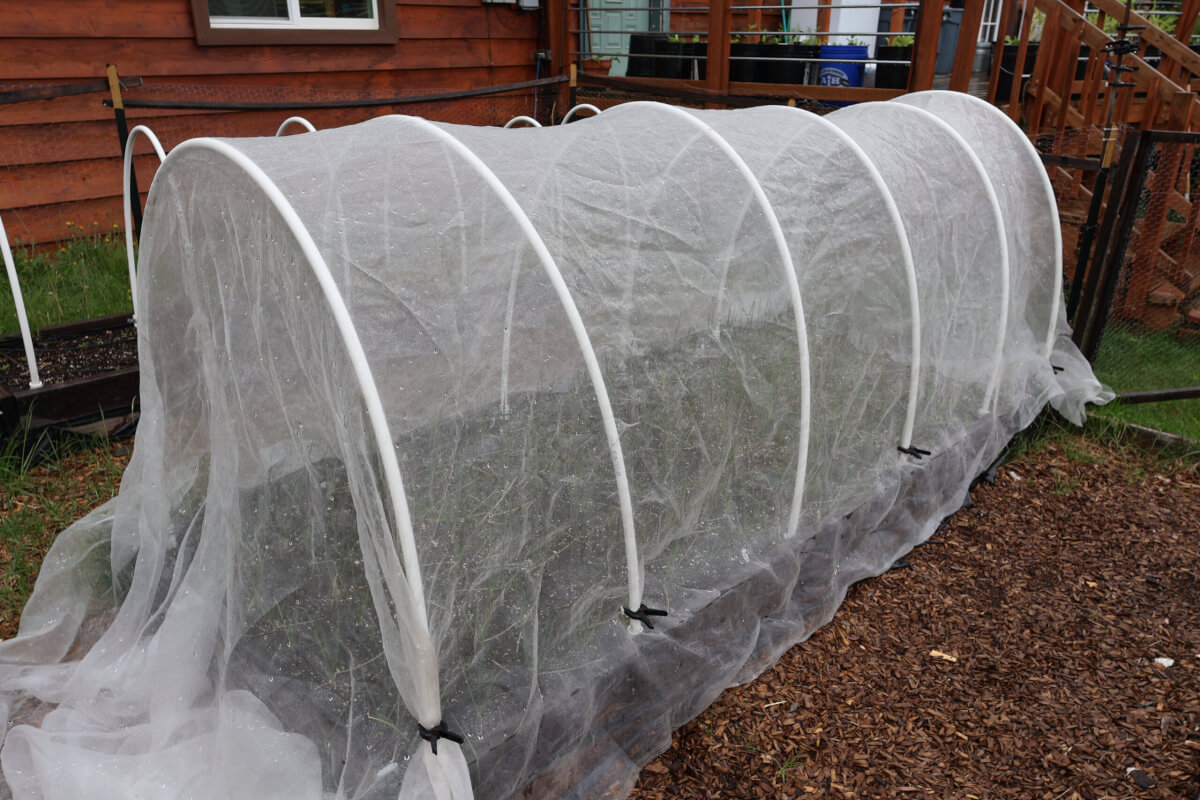
We actually use this for bug netting, specifically on our allium beds. We got a really bad infestation of onion flies several years ago. If you grow allium, this is the very last thing in the world you want. They’re a nasty bug. Not only will they destroy your allium crop when you get them, but their larvae stick around for like 7+ years afterwards.
In fact, if you go out and read the websites on onion flies, they pretty much tell you to move your garden a mile away or dig up your soil and replace it entirely! Extreme measures! Those weren’t options for us, so we studied our adversary and formulated a recovery method, which we’re happy to report was successful. Link on how we did it in the comments.
So, this is an integral method we use to protect our allium crops. We’ve outfitted all of our raised beds to receive our hoops, allowing for crop rotation into any of our beds. We can also protect other crops, if needed, but haven’t found the need to.
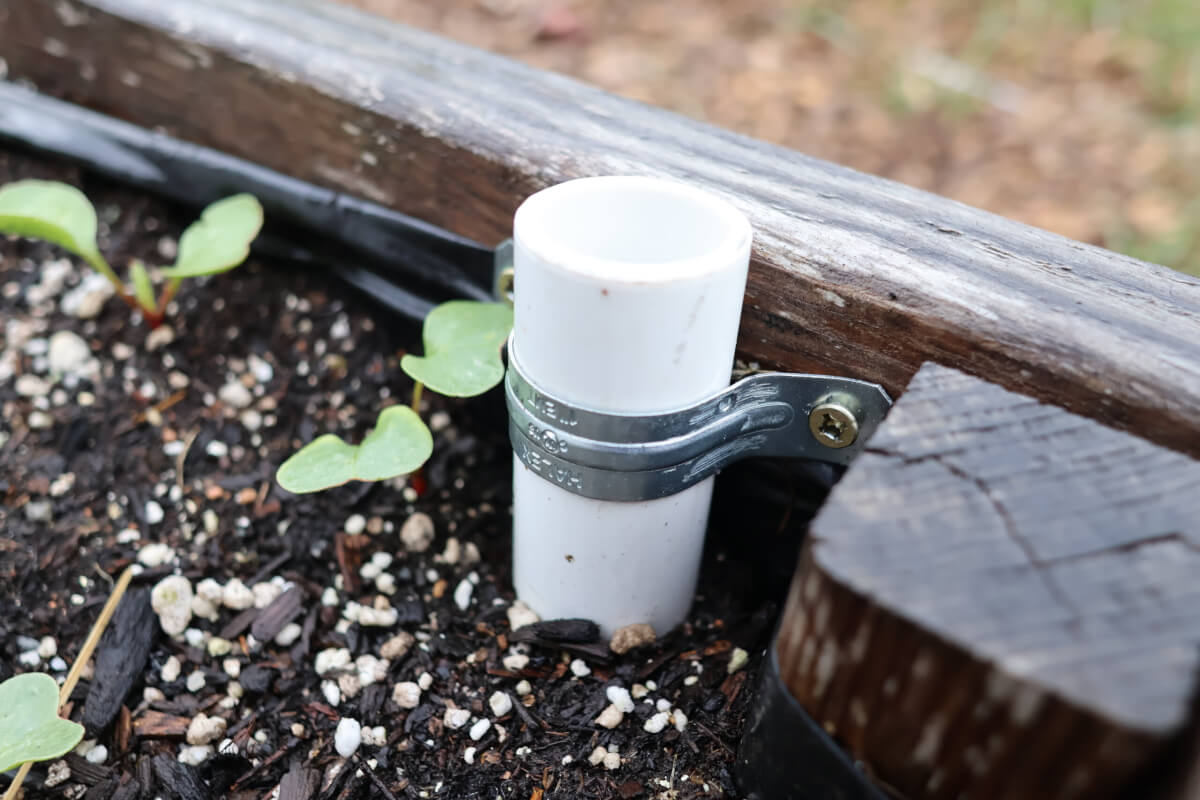
The construction is very simple. The hoops are made from half inch PVC, which is super flexible and easily confirms into hoops. The “receivers” in the bed are 1 inch PVC which has been cut to size and strapped to the bed by a conduit clamp. This allows us to easily place the same hoops on any bed as the hoops just slide into these receivers.
We clamp the bug netting to the hoops to keep it in place using some very inexpensive “bulk” clamps. We do have to remove the netting for weeding, harvesting and other care, but this is quite easy to do.
We also use a “high hoop” configuration, which allows somewhat taller plants. This works well for allium, as you typically need at least a couple of feet of clearance. You can also do “low hoop” configurations, if desired. The length of the half inch PVC determines the height of the hoop.
Theoretically, we could also use this with hoophouse plastic to increase ambient air temperatures. We haven’t yet found the need for this in our specific gardens, but this same method could definitely be used for this alternative purpose!
