
Since we got a bit of rainfall, let’s go through our full rain water catchment systems! At our home, we’re effectively “off the water grid,” so collecting rain water is a vital aspect of operating our off grid gardens.
We’ll start with our collectors. We used to use rain water diverters, but found these to be quite inefficient as they would collect less than 50% of any rainfall. So, we had our gutter crew come out and develop custom downspouts that would allow us to divert 100% of the water into our rain barrels. This gives us “summer mode” and “winter mode” with our downspouts, just by easily swapping out two pre-made downspout pieces.
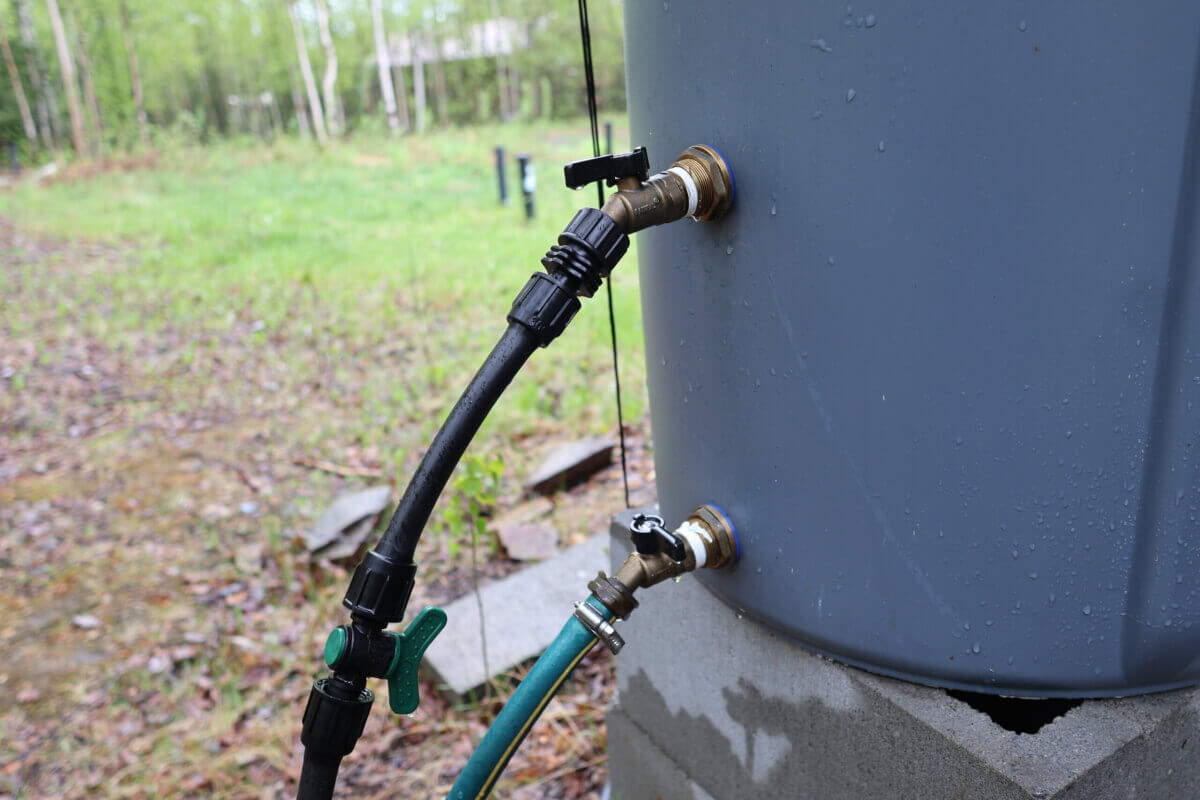
Our actual rain barrels are DIY, made from 32 gallon Rubbermaid trash cans. Our catchment system originally used commercial barrels, but we decided to build our own after our “OG” barrels were destroyed after an early freeze that took out the irreparable fittings. We liked the “dual spout” aspect of our OG barrels, and it provides us a valuable function! Each barrel is fitted with an inexpensive filter, keeping “gutter stuff” out of our water collection and also preventing mosquitos from using the water for breeding.
Each of these rain barrels is connected back to a central water tank with standard irrigation tubing and fittings, which relies on gravity to bring all the collected water back to our tank. The top outlet in our rain barrel connects to the central tank, whereas the bottom outlet is connected to a short hose. This allows us to always have 15 gallons of local water at each barrel, allowing us to fill up watering cans. Excess water flows back to our tank for longer term storage.
Our central tank is a 375 gallon Greer tank, which we bought used and got a pretty decent deal on. The vital key to using gravity in rain water catchment is that our central tank sits physically below our actual rain barrels. This means we don’t have to rely on complicated vacuum concepts, water just naturally flows back to this collection point.
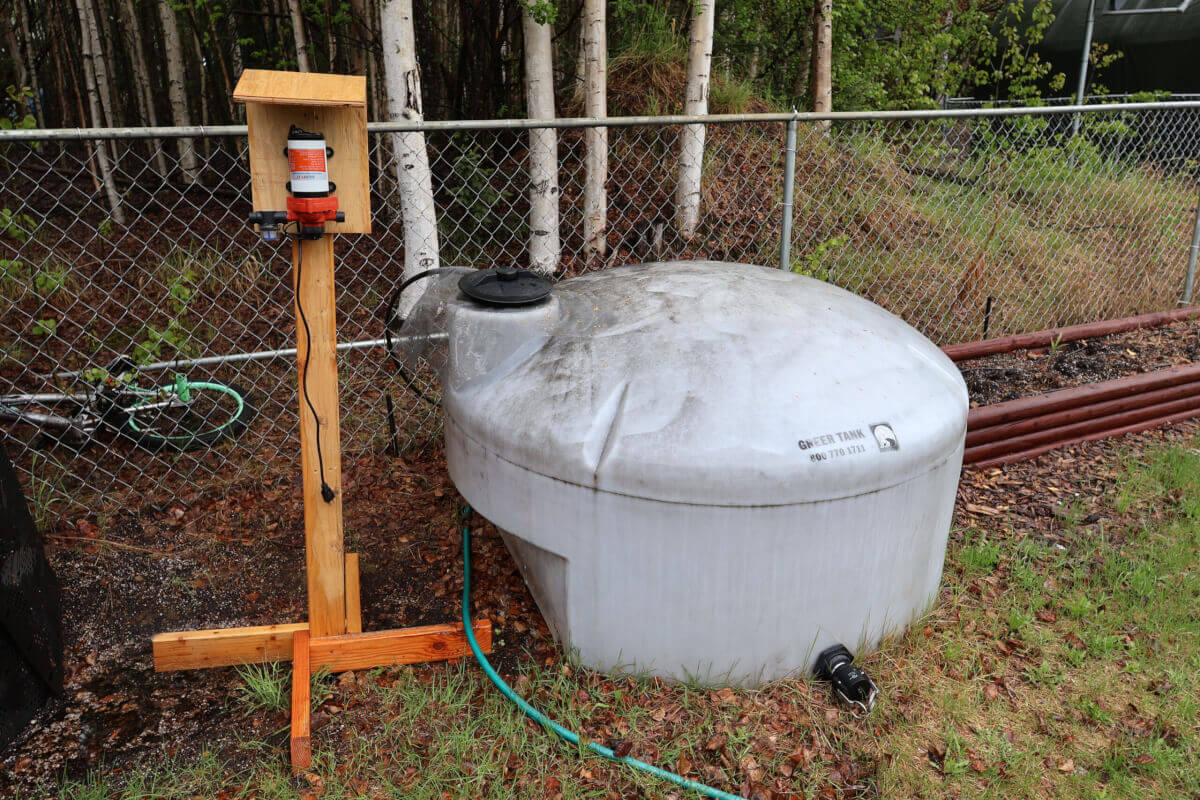
With a centralized collection point, we can then pump out our collected water to one of a number of irrigation areas. We have adopted the “zone” concept that allows us to send water into various irrigation systems or just use a hose end sprayer. We are changing the pump we use this year, which I’m sure we’ll talk about more in the future.
Overall, getting away from rain water diverters and into 100% water collection has made a massive difference in our collection efforts. With just a quarter inch of rain, we are able to completely fill our 375 gallon tank now. Also, having barrels at each collection point allows us to deal with very heavy rainfalls. If the irrigation piping is at max capacity, the barrels can collect the excess and it will eventually drain back into the tank.
We have been pretty happy with this system and have been using it for almost 7 years now. The system has evolved over the years, solving minor problems with each change. We don’t think we could garden as extensively as we do at our home if we didn’t have this system.
Should you want to know more about our system, we made a video last year about it. You’ll find it linked in the comments!
