
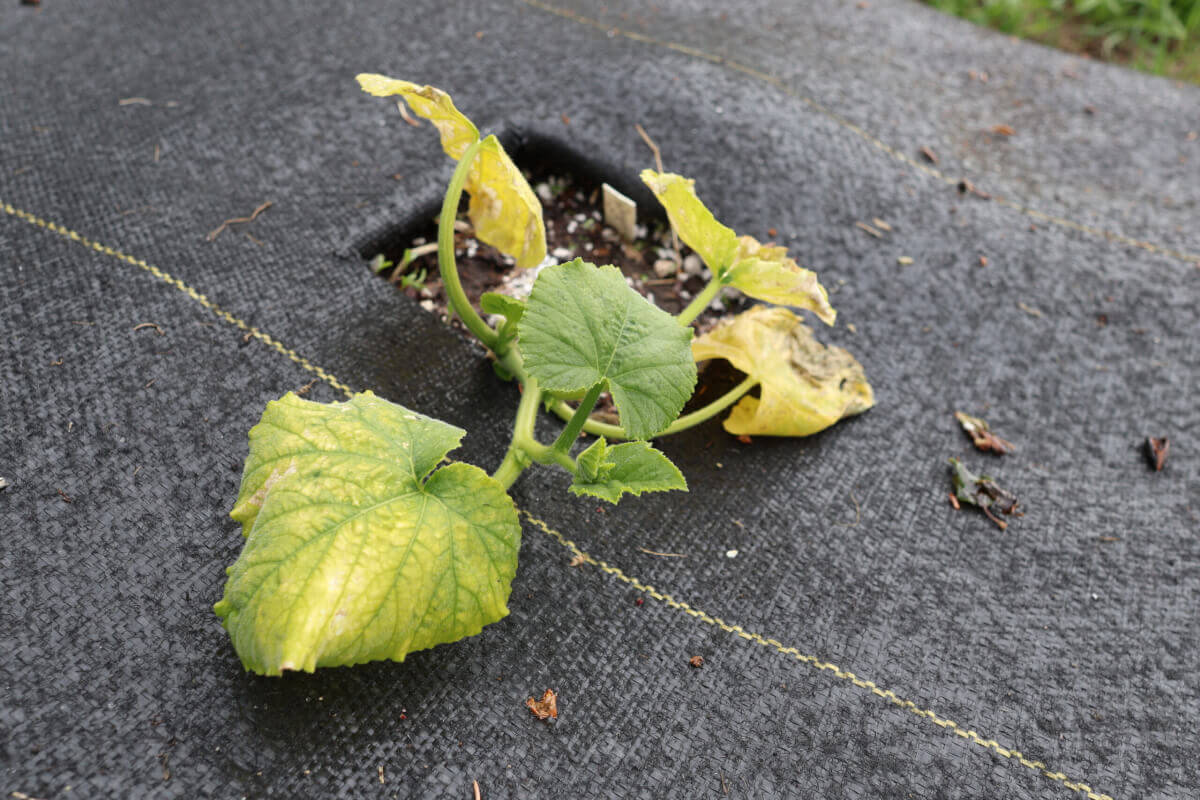
Well, we’ve talked about it. But I guess we should *really* talk about it. The thing a lot of you are going through. And that’s transplant shock.
Transplant shock describes the physical changes that a plant goes through after it’s been transplanted. You can see it when transplanting from pot to pot, but it’s usually the worst when you plant into the ground, container or bed outdoors. It’s very concerning to a lot of gardeners, especially in their first few seasons.
Remember, our plants have been coddled, never experiencing adverse “anything” or “real life” at all. (Except maybe that time or two you forgot to water them.) They haven’t survived outdoors, haven’t “needed” to build roots to get access to water and that dirt you put them in gets quite a bit colder than they’re used to. Put simply, our plants get ticked off about it and they show it! They might yellow, experience sunburn despite being hardened off, get chlorosis (green/yellow interveins), drop leaves or all sorts of other symptomology. Some plants may be worse than others and some may show nothing.
A lot of gardeners might freak out at this, thinking something is incredibly wrong. They might jump to conclusions that they need to add all sorts of things. Our tip? Relax! Remember, we’re planting “garden starts,” not “garden ends.” Your plants have a lot more to go in most cases. Many of them are going to get magnitudes larger. Especially plants like tomatoes, squash, cucumbers and brassicas.
A plant isn’t like a human, it doesn’t repair itself. If a leaf yellows, it’s going to stay yellow. Any problem a plant has will stay like that, no matter what you do. That transplant shock is permanent! What we’re concerned about is NEW growth. That new growth should start to come in after a week or so and it should look nice and healthy green. If that new growth starts to have problems, only THEN do you have a problem that you need to track down!
You can reduce transplant shock, but rarely can you eliminate it. We do recommend hitting garden starts, right after transplant, with a quality water soluble fertilizer. Also, keep them well watered. This is all your plants need to get through this process and they will get used to their new world. If you do this, that new growth will come in nice and healthy, building the future plant that you want.
Gardening, like most of us are practicing, is an unnatural way of growing plants. That transplant isn’t something a seed, naturally grown in the ground, will ever have to experience. But, we and millions of other growers out there, will tell you that this process works. It’s just a little bumpy at times.
So, if you’re fretting over your plants, take a deep breath and give it some time. It’s good to be concerned. But, we’ll tell you time and time again that “less is more” in gardening. Many a plant have succumbed to a panicked gardener trying to “fix” something that isn’t broken. Plants operate at a different time scale than us humans, so you need to slow your pace down to their speed!
We hope this helps alleviate some of the concerns some of you out there might be experiencing. We’ll certainly be talking about problem diagnosis in the future, but transplant shock isn’t among those issues that needs fixing!
