
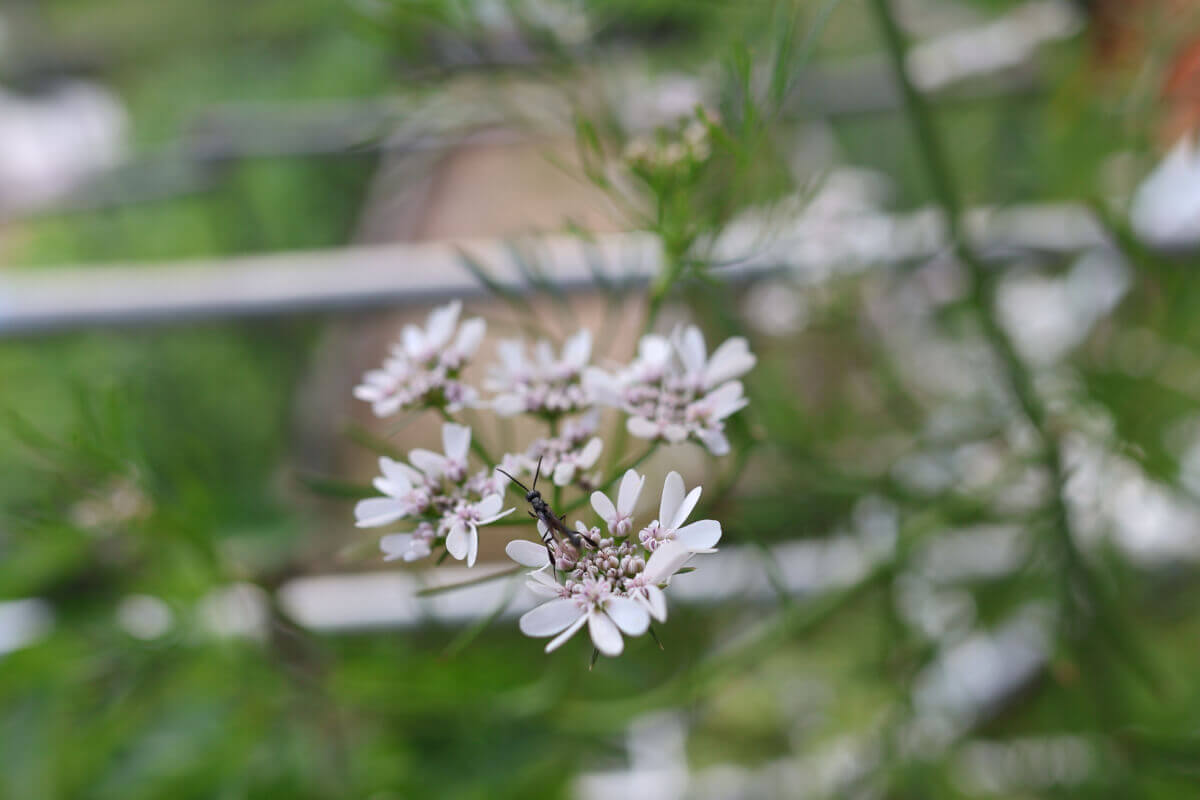
Some of you northern growers may be noticing that some of your plants are all ready flowering and it seems WAY too early for that! So, it’s probably important that we pick apart what’s going on here!
There are three major triggers that plants use to determine when it’s time to flower. Heat, daylight/darkness and plant maturity. Different types of plants use different triggers. When these things get triggered, the plant starts producing various proteins that are designed to make it produce flowers and our plants generally start focusing on reproduction. (Which is often flower/seed or with some plants, fruit production.)
Plant maturity is an easy one and many commonly grown garden plants fall into this category. Once the plant gets to a certain size, age and/or maturity level, that’s when the plant starts flowering. You see this things like tomatoes, peppers, squash and many other common garden plants. Few complain about this trigger type since flowering often means fruit or it simply occurs past a typical harvest window.
Heat is also a common flowering trigger. Essentially, once daytime temperatures warm up to a certain point, the plant assumes it is now peak of summer and that its time to flower. This is an unavoidable trigger in some regions and it frequently impacts a number of “cool weather” crops. Common plants affected by this trigger include broccoli, cauliflower, cabbage, lettuce, radish and bok choy. Our northern region “usually” doesn’t get quite warm enough to fully trigger flowering in plants like cabbage and carrots, but flowering does occur in even warmer regions.
Sensitivity towards the amount of daylight (or darkness in some cases) is called photoperiodism. This term describes the physiological response to light, or absence thereof. For us northerners, the daylight trigger can be really, really annoying. Reason being, with our exceptionally long days, the plant literally thinks its past the peak of summer by the time we plant it in the ground in the spring! Thus, we see a lot of plants flower very early in the season. This flowering trigger affects plants like catnip, mint, mustards, cilantro, marjoram and oregano.
We’ll tell you, it can often be difficult to “truly” pick apart photoperiodism and heat triggers. Since both these usually occur at the same time, it can be truly difficult to determine which is actually causing the plant to initiate the flowering process. Even current science barely understands the topic of plant reproduction and how these triggers actually work, nor does it provide credible studies to back the theories.
Given our extreme environment with 24 hours of daylight, we often get a little bit more insight into certain triggers, particularly when it comes to daylight sensitive plants. How we’ve been able to more accurately pick apart heat vs. daylight is when we still see flowering triggers in relatively cool seasons. If the plant still flowers, even in cool conditions, we can relatively accurately assume that daylight is the more obvious trigger.
We know it can be really annoying, especially with those daylight triggered plants. For those, we’ve generally gravitated towards growing higher quantities of smaller plants to get a decent harvest. So, when we want those herbs like marjoram, oregano or catnip for our kitties…we just double or triple the number of plants we “think” that we should grow.
For those heat sensitive plants, it’s good to start them indoors early enough that you get to full maturity by the time major heat waves start rolling in. This is one of the overall strategies of using a seed starting schedule for your region, it helps you determine when that ideal planting time is. We’ll also likely talk a bit more about this when we start doing deep dives into our brassicas as well.
Hopefully this helps you understand a bit more about what’s going on with your plants. And for some, perhaps offers you a way to get around it in future seasons! We’ll still take a bit of warmth and those long days, though! It takes a lot of it to prepare us for the coming winter!
