
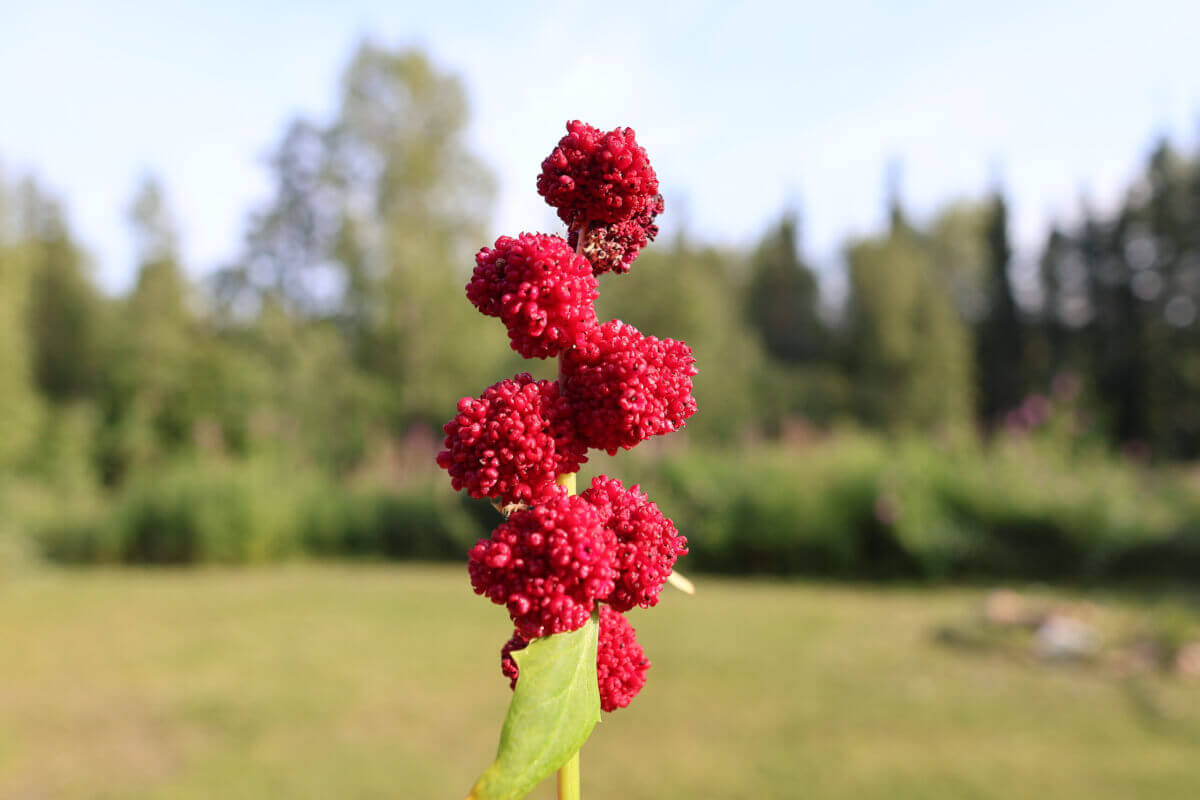
We aren’t particularly nostalgic growers and we appreciate the modern varieties and excellent quality seen in modern genetics. But, when it comes to strawberry spinach, this is one our favorite “old world” edible wild plants that we grow.
In the 1,600’s through the mid 1900’s, you would likely have seen strawberry spinach offered by your local marketeers and trades people. It has since fallen out of commercial favor, but many passionate growers keep it going. Despite being commonly called strawberry spinach, it is not related to either strawberries or spinach. This native North American plant is technically a flower, hailing from the Amaranth family, but the entire plant is fully edible. The real treat are those red berries that are “actually” flowers, they’re a sweet, tasty and berry-like garden snack! Ours are exceptionally tasty this year!
About four years ago now, we initially introduced strawberry spinach into our gardens. We only grew one batch from seed and it has reliable re-sown itself every year since. They can perennialize in slightly warmer zones, but at zone 2/3 you really have to rely on that reseeding capability. Although some consider it to be invasive, due to that re-seeding trait, we don’t find that it interferes with nearby plants and their populations are easily controlled if desired.
Strawberry spinach goes by a number of different names. The official name is Blitum capitatum, but it’s also known as strawberry goosefoot, blite goosefoot, Indian paint and Indian ink. The term “blite” or “blitum” has nothing to do with the common plant disease, blitum is simply the Latin word for spinach. Etymology is often important!
The berries make for excellent toppers on salads or even just a simple garden snack. The leaves can also be eaten, tasting somewhat akin to lambs quarter or sorrel. It’s generally best to eat the greens when young and if harvested mature, are better when they are cooked down like you would spinach.
As you might have gathered by the native names for this plant, the plant is an excellent companion for the dye garden. Native Indians used strawberry spinach berries to create bright red inks. The leaves can also be used to create a green to goldenrod colored ink. Strawberry spinach is super easy to grow, so it makes an excellent initial choice to work with if you’re just beginning to explore dye gardens.
We love keeping the storied history of strawberry spinach alive and well, it’s one of very few “old world” edible plants that we both eat and enjoy. We welcome its semi frequent appearance in our gardens, often offering a striking and bright contrast to our otherwise “very green” gardens.
