
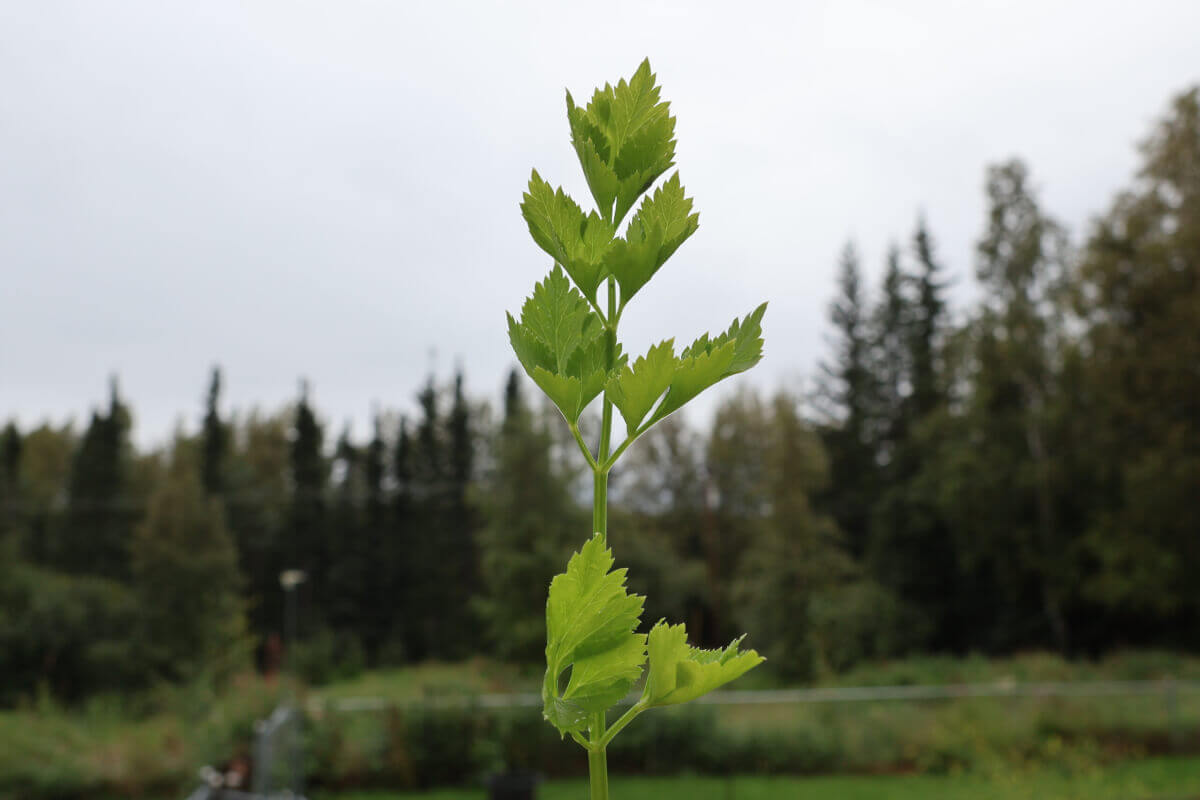
We wanted to highlight an herb that we came into rather far into our growing journey. It’s been a consistent favorite since we started growing it, so we figured some of you might want to know more about it.
You might think this is parsley or perhaps even cilantro, but what you’re actually looking at is called Amsterdam Seasoning Celery. True to its name, it has a very strong celery flavor. It’s not technically celery, though, as it doesn’t develop the thick stalks you’d find with traditional celery varieties.
We’ve found it incredibly useful for early season celery additions in our dishes, since it produces fairly early in the season. We can often start harvesting it in late June and it lasts all the way up until our final harvests. It is practically a 100% stand-in for celery. But, what’s cool about it is you don’t have to start it super early or wait until the very late season to harvest it. It’s also quite bolt resistant, even in heat, performing very similarly to parsley.
We didn’t know much about seasoning celery when we started growing it and we kind of started growing it on a whim. But, years later, we’ve been using it in soups, stews, pickling, salads, tuna fish sandwiches and countless other things where celery is a welcome addition. We’ve found ourselves using it more and more over the years we’ve grown it and it’s been amazing to have a solid celery equivalent during the growing season.
Our favorite use is obviously fresh, but the herb can also be dried for long term storage and use. If preserving it, you can keep it whole, dice it up or puree the dried herb into a powder. It can also be frozen, although that’s how we preserve our “actual” celery, so we often go for dehydration as our go-to preservation technique for this one.
As far as we know, we’ve only been able to find one seed producer for this herb. Renee’s Garden is our seed source and this brand of seed can often be found locally at various nurseries. We’ve found it takes well to intensive growing techniques, so feel free to pack those plants in.
So, if you’ve been seeking a way to get celery additions into your summer seasonal cooking, this is how we roll. Amsterdam Seasoning Celery has found itself on our “must have” herb list among many of the classics like parsley, thyme, cilantro and basil!
