
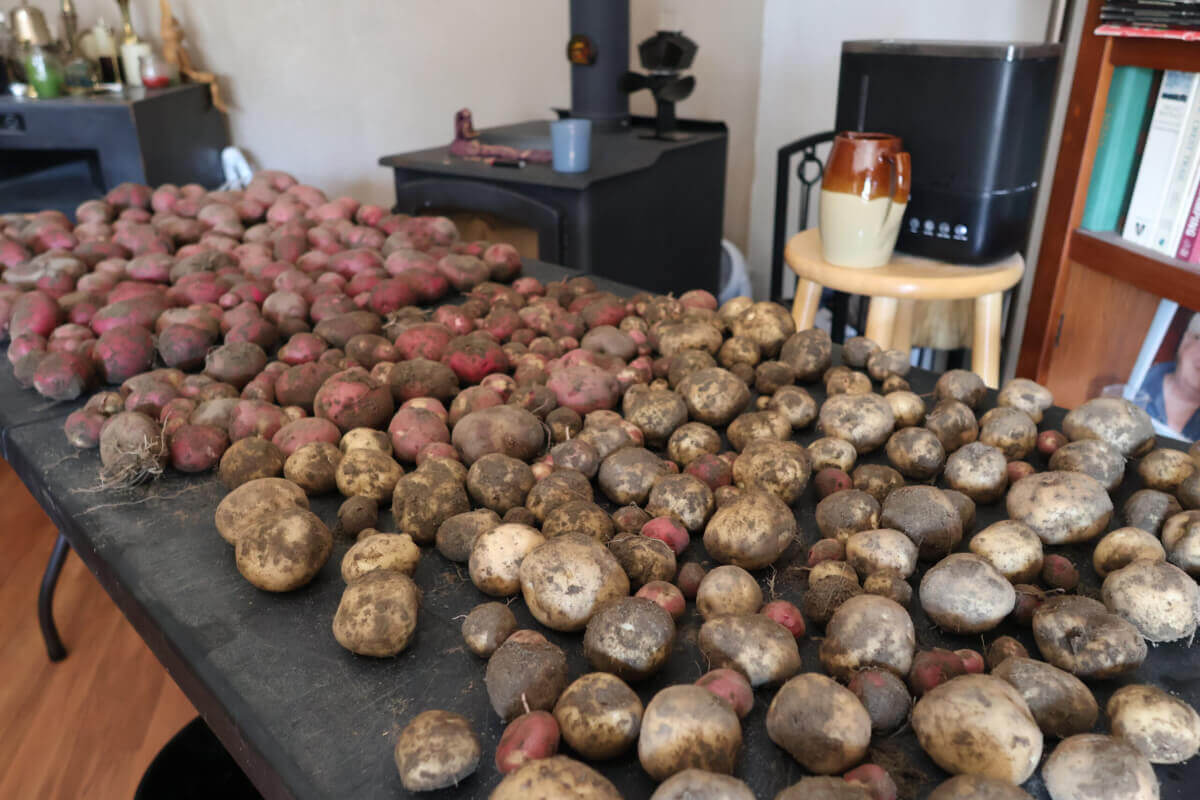
Hope you all are having a great labor day! As for us, we celebrated it by performing a little bit more labor! Our potato crop has been harvested!
We’ve definitely had better potato seasons than this one, but we had a few things working against us. The rainfall this season has been out of this world, which can definitely affect potatoes. We definitely saw higher than average field spoilage, despite harvesting quite early. We’re also starting with a brand new seed potatoes this year, so we’re not working with the “best of the best” genetics. Typically, the crop improves as you select out the best genetics over time.
But, no doubt we did better than last season. For those that weren’t around back then, we experienced what we suspect to be a poisoning of our crop and had to harvest our entire crop out in mid July. Since we weren’t 100% sure it wasn’t disease, we also decided to completely start over with our seed potatoes this season.
One of the important things to do with potatoes, prior to storing them for the winter, is to cure them. This is basically a fancy word for drying them out. We simply lay our potatoes out in a single row for about 5 to 7 days, after which they’ll be plenty dry for storage. This can heavily reduce spoilage, since wet potatoes can problems if stored right away. It also slightly helps storage times, typically by an additional month or so.
Also, don’t clean your potatoes, as in wash them! The dirt (and various microorganisms) help protect your potatoes. It’s fine to brush off heavy dirt, but it’s best if you wash your potatoes when you go to use them.
It’s really important to keep your potatoes out of direct sunlight, which is why you see us covering our potato crop with towels during the curing process. If exposed to light, the potatoes can develop solanine in their skins. Solanine is a toxic poison and it’s just best to avoid it if possible. While it can cause mild and annoying symptoms in low quantities, solanine can be lethal if enough is ingested.
Also, pro potato tip? If you see that your potatoes have developed any green bits, that’s a sign of solanine. It’s best to cut that part of the potato out, which is usually easily done just by skinning the potato a little bit more or cutting off the offending bits.
We did mention that we’re harvesting somewhat early this year. Potatoes are rather frost tolerant, so they can certainly be left until a bit later. We got a break in the rainfall, so we decided to go for it. The benefits of harvesting now versus a couple weeks from now will be minimal, at best. Plus, as we say, our focus is on harvesting everything out at this point. Those frosts and cold temperatures are imminent for us!
We are a bit perturbed that one of our “supposedly white” seed potatoes turned out to actually be a red potato. We suspected something was up when we were seeing purple flowers. But, hey, that gives us a reason to go seed potato shopping again next year. We want to try to find a solid Russet style potato as that appears to be what we’re currently missing from our lineup.
We’ll have more to say on potatoes soon. This is step one in a multi step process. We’ll also be talking about how we strategize our use of potatoes, to maximize those genetic qualities we mentioned earlier!
Hope you all are enjoying your labor day weekend!
