
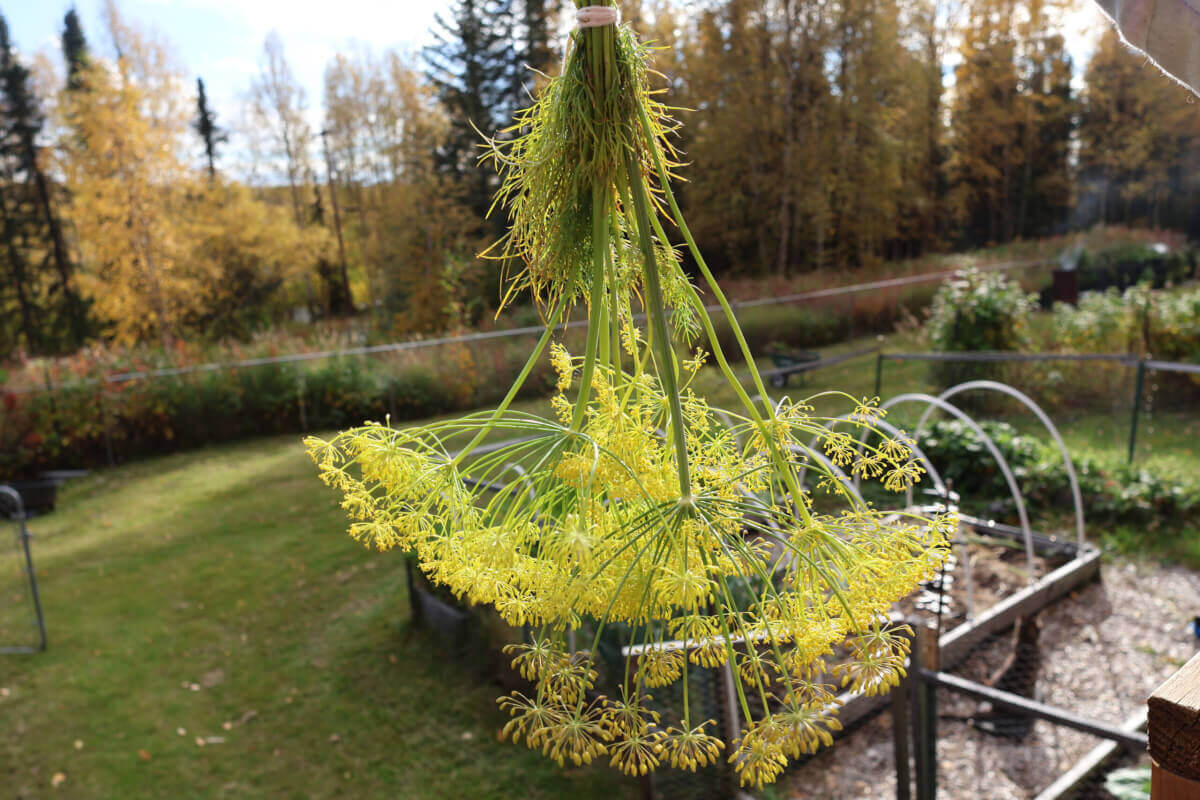
OK, let’s talk herb preservation! A lot of folks may have a decent amount of herbs they want to preserve for winter, so we’ll share how we do it!
For the purposes of this discussion, we’ll assume you want to create a dried form of your herb. This works great for a ton of herbs, such as thyme, oregano, marjoram, dill, mint, rosemary, parsley and many others. (You can also do less common things like dill flowers, as you see us doing here!) Basically, if you can find it in a spice jar at the grocer, you can assume it can be dehydrated. To get dried herbs, we’re going to use the dehydration preservation process.
Our preferred process is to tie a string around the base of our herb’s stems, which then allows us to hang our herbs upside down for air drying. This has a significant benefit in that it causes the herb’s oils and flavors to concentrate into the leaves of the dried herbs. We usually hang our herbs for at least 3 to 4 weeks in order to ensure they are sufficiently dried before processing them further.
Now, there is no reason you can’t use a dehydrator to dry out your herbs. However, you won’t get that oil concentration at nearly the same level and thus your herbs will be slightly less potent. Also, it’s easy to over-dehydrate herbs, which can quickly take them into less flavorful territory as well. It’s good to use a very low heat setting and just take your time with them. We are rarely in a hurry, so natural dehydration works quite well for us.
For herb storage, you simply cannot beat glass. One of these days, we’ll share our rather evolved herb storage methods, but the general goal we advise is to have them airtight. Air exchange will degrade your herbs. When properly stored, however, dried herbs can literally last for years and years with very little degradation.
Once you store your herbs, it’s good to monitor for any levels of moisture that might appear on the glass. They typically display as tiny little water bubbles. This means your herbs are not sufficiently dried and you really “should” take them out and dry them further. (Such as on a plate with a little bit of parchment is fine.) Improperly dried herbs can spoil very quickly, so it’s best to just verify that you did indeed get all the moisture out.
There certainly are other ways to preserve herbs as well and we’ve shown you some of those in past posts. Examples of these include herbed oils, freezing them, herbed butters and many other creative preservation methods. You can also make sauces such as Chimichurri, Chermoula and other herb focused sauces. There’s a ton of flexibility in these sauces and you can use them to top meat cuts or as a dip for other veggies or breads. Many of these can easily be frozen for long term storage as well.
If you’re overflowing with herbs, it may be worth your time to look into crafting various spice mixes. If you didn’t know, you can easily make your own basic mixes such as celery salt, garlic salt, onion salt and so forth. If you have the right combinations of herbs, you can even make complex herb blends like Herbs de Provence, taco seasoning, masalas and many others. There’s no issue with blending home grown and commercially purchased herbs and spices, either. Home made mixes from your home grown herbs can really elevate your cooking.
We have some late season projects planned for our herbs this year, so we’ll likely have more to say after our major harvesting is done. But, we figure it might be helpful to get this information out sooner than later!
