

Well, it’s looking increasingly like it was a good decision for us to pull the plug on our gardens this week. We’ve had our first day where frost simply did not let up through the day!
But, this does allow us an opportunity to dive into the concepts of “light frost” and “hard frost.” These are somewhat idiosyncratic terms that gardeners use, mostly because there’s an observable difference in plant survival between the two.
With light frost, often you will barely even notice it. A light frost just very gently kisses the plant’s leaves with frost, often around the very edges of leaves and flowers. It’s definitely enough to “take out” some kinds of plants, particularly those without any frost tolerance whatsoever. These frosts most often occur in and around freezing temperatures, typically something like 30F to 35F.
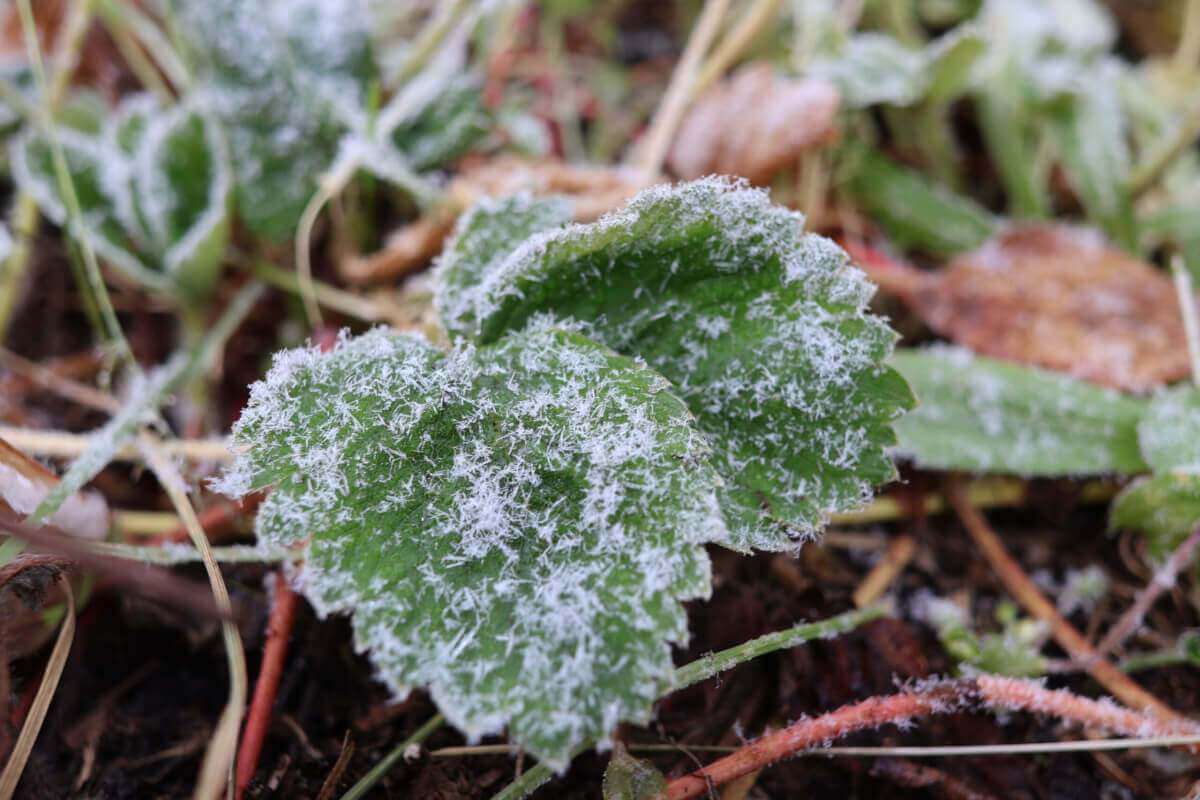
What you’re observing here is what is called hard frost. It’s distinguished, noticeable and can be seen from far away. Hard frosts result in actual ice crystals forming on the plant’s leaves and freezing of the plant’s cellular structure and water content. This frost is devastating to a large number of plants, aside from the most exceptionally cold hardy plants which can resist some amounts of hard frost. We typically see hard frosts when temperatures dip into the 20’s Fahrenheit, much more often at 28F and below.
When we talk about “cold hardy” plants, we’re describing those plants that can resist even these hard frosts. Examples include kale, many types of greens, brussels sprouts and so forth. There is a limit for each plant on just how much frost they can take before “giving up the ghost” though. For example, Brussels sprouts can resist significant hard frosts, whereas lettuce cannot.
We heavily exploit our knowledge of the frost tolerance of plants every season. We ensure that when we get to this point, the only things we have remaining can tolerate heavy frosts and even snowfall. For us, at this point, it’s basically only root vegetables that remain. These can typically survive a lot of frosts, since our actual harvest is protected by the soil. Nonetheless, our temperatures will dive deeply soon and we’ll be pulling and preserving these just as well. At lower latitudes, it’s popular to leave root veggies in the ground, but in the far north, we don’t recommend it due to our low temperatures.
We’re definitely feeling the pains of shutting down our gardens in the cold! We fully cleared our greenhouse last night and we’ll tell you, freezing temperatures don’t make it fun. Dirt was freezing to our containers, our water systems were barely functioning and our hands were nearly frostbit by the time we finished up. It’s not our first rodeo fully shutting down in freezing temperatures, but it never gets comfortable!
We started up our first fire of the season last night, the call of winter is getting quite strong here! We’ve got a few more days of work ahead of us and we’ll be wrapped up for the season!
