

We’re harvesting out our final root vegetables of the season! We pulled our parsnip, turnip, rutabaga and few remaining beets!
When it comes to root veggies, they’re some of the most flexible and cold hardy things we grow. We always save them for last, mostly because they can withstand snowfall and rather cold temperatures, given that the desired crop is underneath the soil. We love having that flexibility as our season shutdown process is, well, a bit much.
Newer growers might not fully get the equation of root veggies like turnip, rutabaga and parsnip. They certainly aren’t the most common veggies in the American diet, but are much more common in other places! You can kind of think of them like a potato, but with a slightly different flavor. They go absolutely great in meals like soups, stews, roasts, casseroles, cottage pies, veggie medleys and really any kind of dish where you might also use a potato. You can also mash them, just like mashed potatoes. We aren’t sure why they aren’t popular in the US, but we like them and it’s good to get a bit of diversity in your starchy veggies!
Like with many of the crops we grow and preserve, we’re using blanch and freeze for our long term protection of our root harvests. When it comes to beets, they are a bit special as they need to be fully cooked (and not just blanched) prior to freezing them. Honestly, though, we’ve tuned our beet harvest so we mostly just use them for fresh eating these days. This preservation method works great for us, since we don’t have root cellar temperatures and humidity easily available to us.
So, this means that we are completely done with our gardens for the season! We’re quite happy to be at this point as it’s really been getting cold and miserable to be working outdoors. Our weather is also not cooperating any further, where pretty much any precipitation is coming in as snowfall. Plus, this means that we can start to relax a little bit and maybe get a few last minute pre-winter projects done. (For example, I want to build a couple bird feeders this year!)
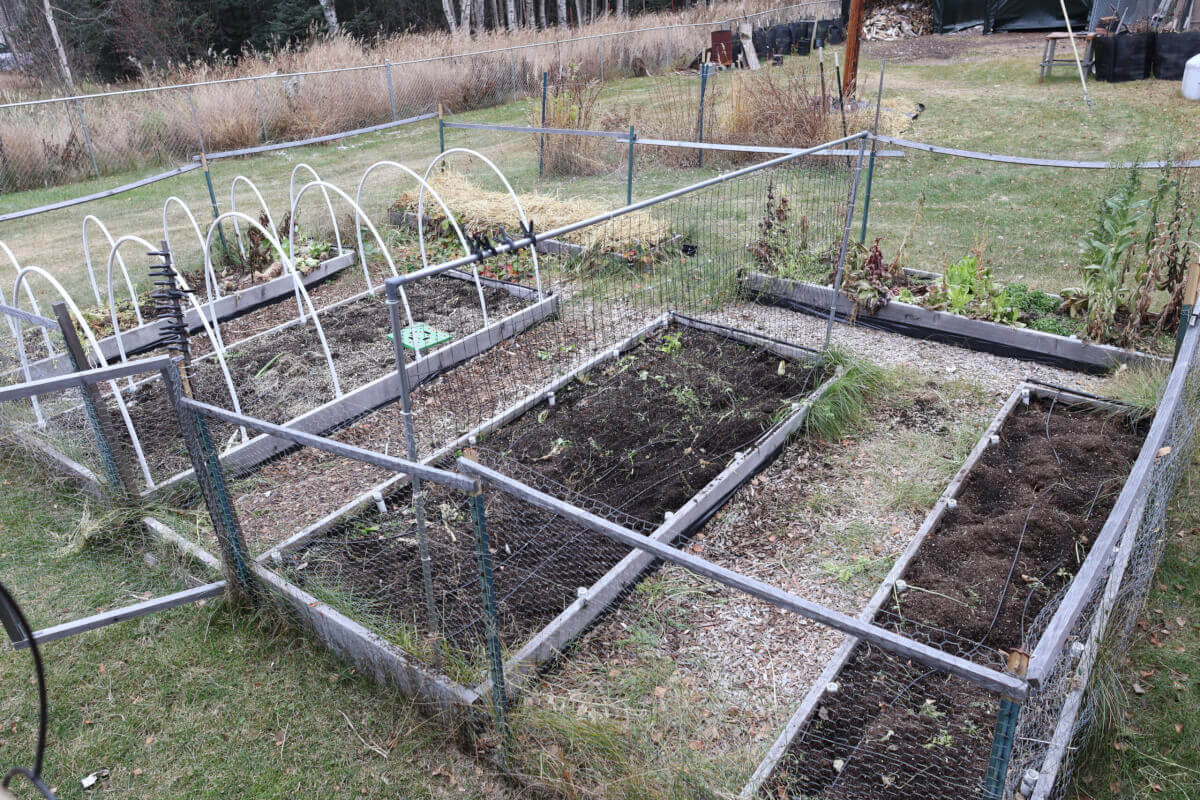
One of the other end of harvest tasks we try to do is to perform a major weeding of our raised beds. This helps reduce the weed load into the next season. Though we can’t usually get every single weed, if you can at least reduce it going into the following season, your next season will be a little bit easier. Fortunately, we got this done just before it started snowing again!
Another helpful end of season task we do is try to think through any major changes, adjustments or thoughts we want to carry forward into the next season. As we talked about early in the season, we keep a very basic journal of our gardening efforts. It’s best to do this effort while things are still fresh in your mind, things get really vague by the next season!
The kinds of things we document? If we want to grow more or less of something. Maybe we want to explore different varieties due to failures or issues. Perhaps we want to shift things between containers, raised beds or our in-ground community gardens. Basically, simple but important “notes to self” that we can use to jog our memories next season!
We’ll have our our official end of season post tomorrow, but we are definitely at the end here! It’s both a bummer and a relief at the same time. Some days, we’re jealous of folks in climates that can grow all year. But, we also truly value our break and use it to further other interests we have.
