
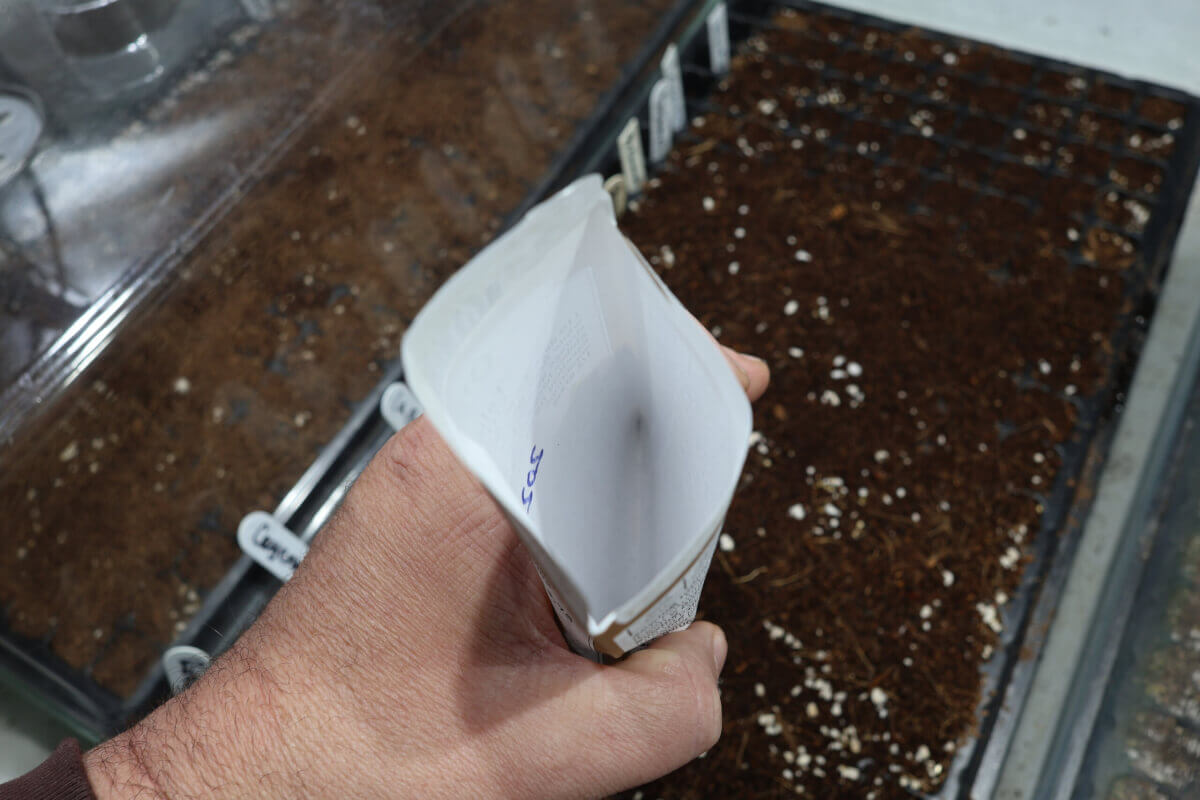
Well, we weren’t even one single day into our growing season this year and we all ready have a catastrophic failure to share with you! As we say many times, we openly share our failures because we like to demonstrate that every gardener has their challenges.
As semi large scale growers, one of the things we really have to pay attention to are the seed counts that we are buying. This is typically represented by two important values. The number of seeds per gram of a given seed and the size (or amount, usually also in grams) that you are buying. So, for example, if there are 200 seeds per gram and you buy a 1/2 gram, you can expect about 100 seeds in a given seed packet.
Well, as we were doing our onion seed shopping, I got on a whim to just grow yellow onions this year, as opposed to both yellow and white onions as we’ve done in many years past. We’ll probably talk more about that decision later. The point is, I decided to pull the trigger on just yellow and red onions this year. Little did I know how consequential that “small” decision would be!
As we went to sow our onions this year, the oversight stared us in the face. We were almost 100 seeds short! And we needed them! I absolutely knew I had done the math on seed counts for onions and we were good!
It took me a minute to deduce. But, yeah, when you buy only two seed packets with a 100 seeds each, you can’t exactly grow 250 onions! I had originally planned on buying three packets, for a total of 300 seeds. Honestly, I deserved it for playing so loose with our plan at “go time!”
Now, fortunately, we hadn’t yet tossed our previous year’s onion seed, which came in super clutch in a situation like this. We simply over-sowed them 2 to 1 to counter the seed viability issues you see with allium in the second year. Otherwise, we’d have been scrambling as onion starts are very uncommon to see sold at nurseries.
I’m certain there will be more oversights and mistakes for us to share with you this season! It seems no matter how much we do this, something always gets us. But, this is just one reason why we teach that garden planning is an absolutely essential task when you go from hobby grower to serious home food production!
