
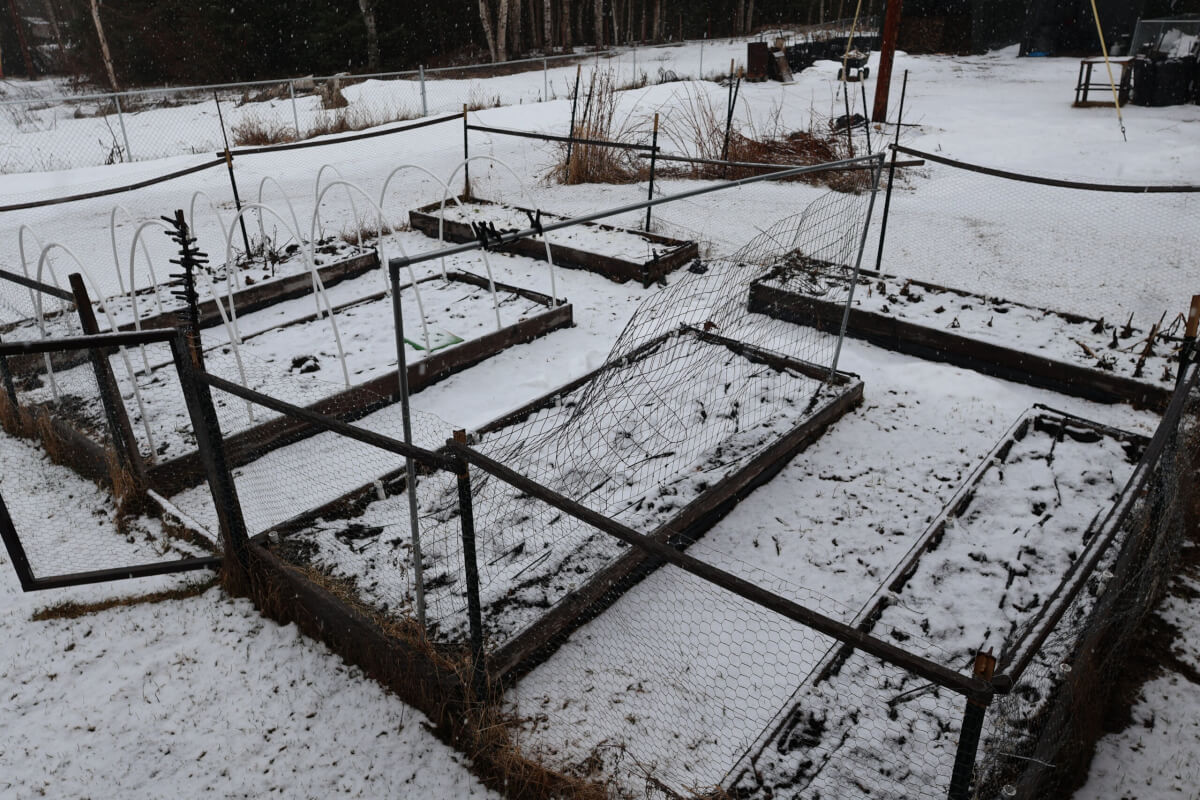
OK, as we march towards our coming planting dates, let’s talk about something important. And that’s fool’s spring. Every year, new and unsuspecting gardeners lose their entire gardens to mother nature.
In most seasons, spring will often present with sudden warmer temperatures and nicer days. We start seeing green up, all around us. Many newer growers take this as a sign that it’s time to plant. So, they trudge ahead and sink their entire garden into the ground.
We call this period “fool’s spring.’ In cold climates, it’s very likely that mother nature likely has other plans! Even right up to our expected last frost dates, it can still snow, sleet, freeze, ice over and suddenly drop temperatures without a moment’s notice. And then, bam, that garden is at best severely damaged, or at worst, it succumbs to nature.
So, how do we navigate all this?
First, we don’t plant anything outdoors until we’re at least two weeks to last frost. At that point, we look at our 10 day forecast and decide whether to proceed or hold off, based on the probability for adverse conditions. We’re usually concerned about major snowfalls, but also unseasonably cold low temperatures into the 20’s.
We start with planting our cold hardy and frost tolerant plants only around that point. We also perform any direct sows around this time. All of these things will tolerate cooler soils and survive sudden weather shifts without difficulty, in the event that the weather turns on us.
That usually brings us to about a week to last frost. We again peek at that 10 day forecast, which is now showing us expected conditions up to and a little beyond our average last frost dates. Sometimes we see dangers, sometimes it looks like smooth sailing. What we see determines whether we proceed, or not, with any plants that are frost sensitive.
Even if we decide, at this point, to proceed with our frost sensitive plants, we’re often still quite careful. Even with all these precautions, sometimes we still get an unpredicted late snow or one final “hoorah” out of mother nature. So, we often hold off with our most cold sensitive plants, such as squash, peppers, cucumber and basil until we’re extremely certain no more frosts are in our future.
Unfortunately, there’s very few ways for us to cheat mother nature. Even if you get away with something one year, the lessons we’ve discussed here will eventually be taught!
