
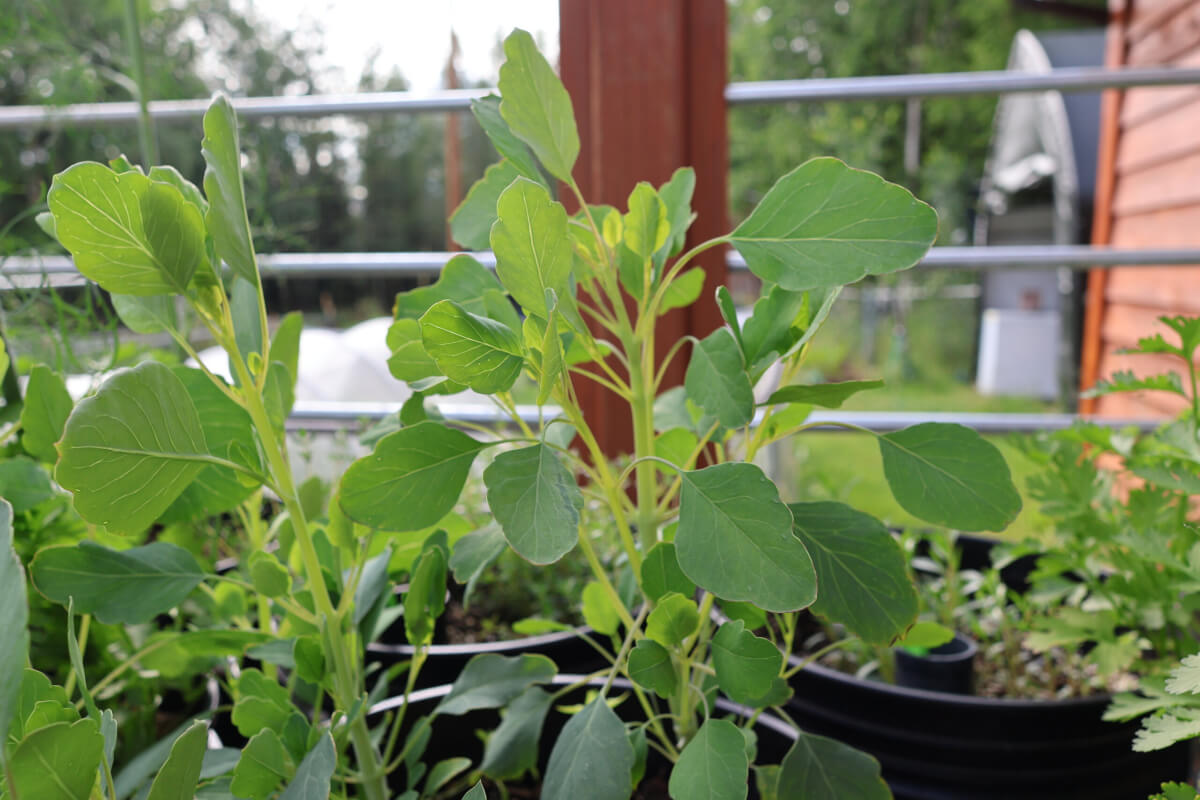
Some posts, we feature interesting and less popular things we grow. It wouldn’t be a Frosty Garden growing season if we weren’t pushing our boundaries and trying some new stuff! You folks that think cilantro tastes like soap might just think we’re decidedly crazy after this one!
This herbaceous plant is called Papalo, or more specifically, porophyllum ruderale. This foreigner to the north is most commonly grown in Mexico and South America, typically for use in salsas. It’s used as an herb, with common dishes being salads, soups, sauces and greenery for tacos. It’s most popular in Bolivia, where it’s known as Bolivian coriander. There, it’s featured in an authentic chili sauce called llajwa.
We’ll be honest, what drew us to trying this herb was the description. “Cilantro on steroids.” When it comes to Cilantro, we are in the “not soap” crowd. But, this one is described “like Cilantro,” just with a “bold, soapy taste.” We figured this herb might help us understand this dilemma a little better. (And, yes, now we “get” all you Cilantro soap people! I guess we like eating soap!) But, it also has a rather green and robust flavor, kind of like mizuna or other mustard greens.
We were quite uncertain of how this one would grow for us, considering it definitely favors hot climates. But, it’s doing quite well. We tested it for cold tolerance and it handled high 30’s and low 40’s with no troubles. The plant is purported to grow best when offered intermittent dry spells, but we are seeing no issues growing in the constant moisture environment of our sub irrigated systems. It’s still too early in the season to see if it has flowering issues like cilantro does, but we understand it can grow to 5 foot tall!
We’ve been snatching up plenty of leaves for our taste tests as this herb is completely foreign to us. We can appreciate why this herb would be divisive, but we’ve been rather enjoying it. Definitely looking forward to throwing it into our fresh salsa game, which we’re decidedly elevating this season. We might even try our hand at some authentic dishes with it, like cemita sandwiches that you’d find in Puebla, Mexico.
We haven’t yet decided whether this one will be continued into future years. We need to see how we use it throughout the season, how much it appeals to us and most importantly, what we can do with the preserved product. We’ll likely dry some at the end of the season, which will be perfect for soups and stews we commonly make over the winter.
It’s been a good while since we’ve brought in a completely foreign herb to our gardens. It’s always an exciting thing to play with new flavors and get to know something we’ve just had no exposure to. We think it’s worth growing at least once, so that’s why we’re featuring it!
