
Since we’re rapidly approaching our average first frost dates, we should probably also share our end game strategy for both fertilization and watering. The short gist is we do as little as possible.
When it comes to watering, it’s important to know that damp soils are the number one source of moisture that contributes to frost. Excessive watering, combined with cooler temperatures, is practically a recipe for frost. While certainly some of our plants can handle it, it’s probably better if we can at least reduce the severity of those frosts.
Now, if we go through a freak drought this late in the season, we might consider watering. But, at least where we’re at, we can usually rely on natural water sources alone. On average, we really don’t need to water our gardens as we approach our frosts as the cooler temperatures also reduce the water uptake our plants use, too.
When it comes to fertilization, we also lay off on this starting about a week or two before our average first frosts. If you’re like us, regularly contributing to the NPK of your plants, the ground has plenty of residual nutrition to help the plants finish out. We’d prefer to allow our plants to extract as much excess NPK as is possible. Also, just like with water, nutritional uptake also slows down.
Our focus at this point is almost entirely on harvesting things out, rather than caring for the garden. If we can (or should) do some weeding while we’re harvesting things out, that’s a bit less detritus we’ll have to remove next season. Plus, it can also help continual weed development as the weed’s seed pods will be removed.
We know there’s a strong streak of hope in gardeners, we wouldn’t do all this work if we didn’t have it. But, it’s also important to come to the realization where you’re at in the growing season. If you’re hoping for those tiny tomatoes or super baby squash to eek it out? We’ll be blunt. It’s not going to happen.
Once harvested, whether we physically remove and compost a given plant depends on the situation. We do cut off and compost our container garden plants, mostly because we need to reclaim the soil. If something is huge and unsightly, we might also remove it or at least cut it down. But, we leave a lot of our plants in the ground for the winter to finish it off. It’s much easier to remove and compost the next season.
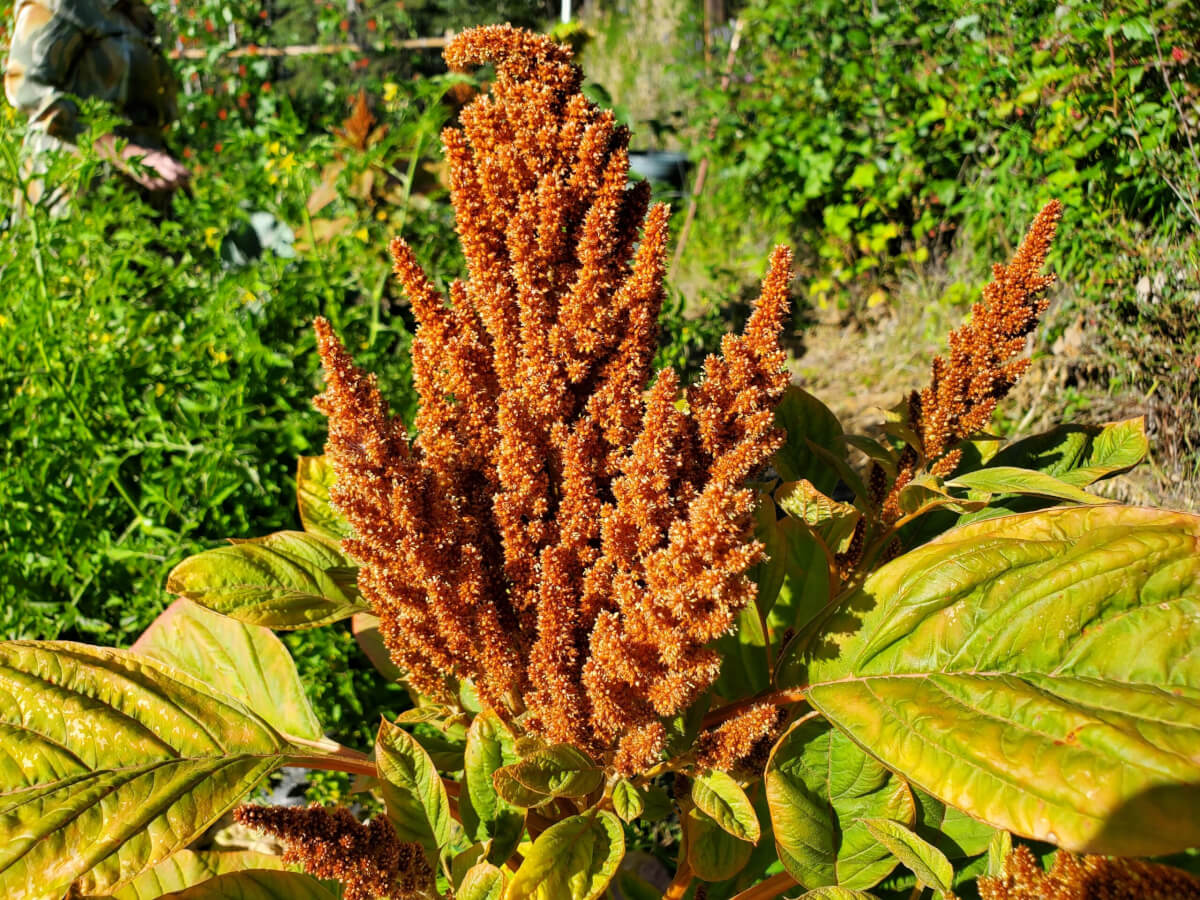
Oh, and if you’re curious what this plant is? This is an experimental crop this year, Giant Amaranth. It’s quite gorgeous in the late season! We’re entirely inexperienced in growing it, much less harvesting it and actually using it. We’ve done a bit of research, but we’re ultimately just going to have to figure it out. It seemed to do decently in subarctic soils and it looks like we’ll get a semi-decent harvest across four plants. We’re excited to try and use it! We might put up a post, illustrating how little we actually know. LOL.
Good luck with those harvests, everyone! We’re definitely looking forward to the coming holiday weekend, we need a bit of extra time to get caught up again!
