
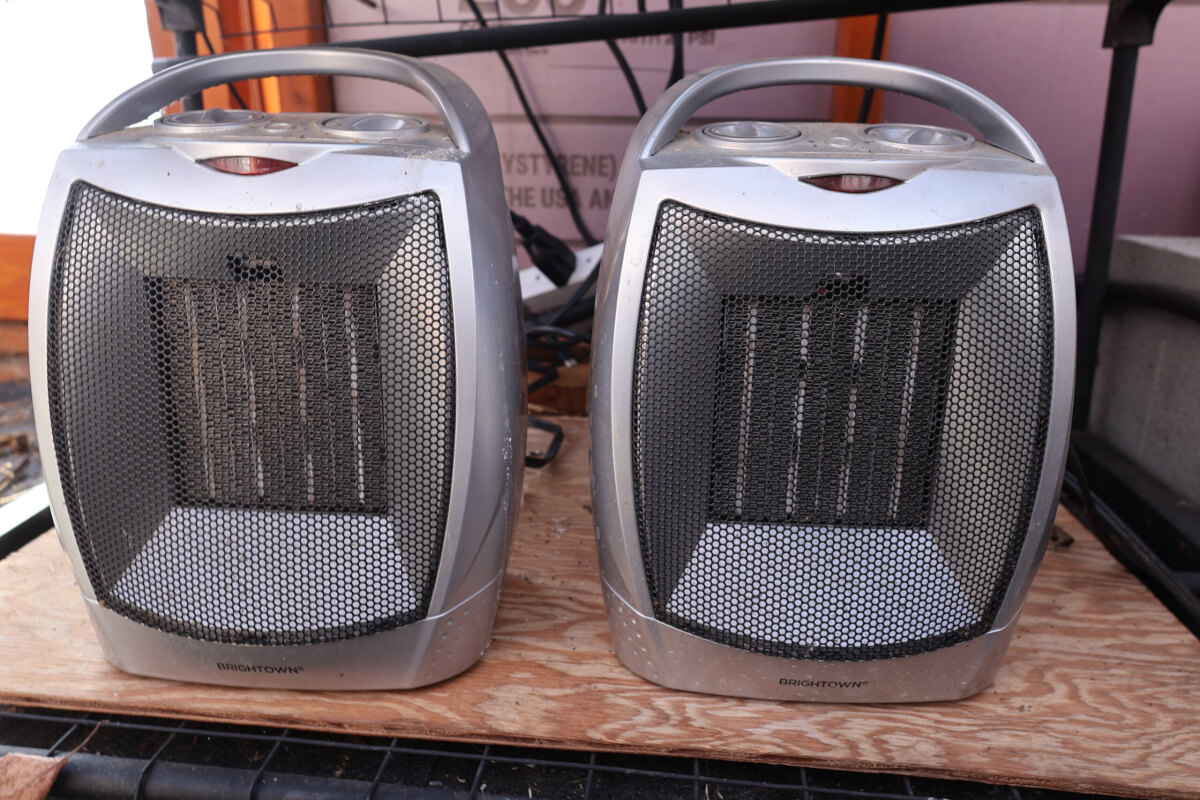
To round out our greenhouse insulation and heating discussion, let’s illustrate the heating systems we use in our greenhouse! There’s lots of options, so let’s discuss some of our opinions on the matter!
BTU’s, no matter how you get there, are costly. Be it propane, diesel or electricity. We previously discussed how we’ve prepared our greenhouse for supplying heat against frigid outdoor conditions, without lighting money on fire.
Calculating the needed BTU’s is a little bit science, a little bit of guessing and ultimately, testing a hypothesis. But, greenhouse heating is wholly a function of volume and loss rates. The loss rate is tied to the temperature delta (or difference) you’re trying to achieve and the insulative value of the greenhouse.
More space and more loss means more BTU’s. Less space and less loss means less BTU’s. Heating something up 20 degrees (like we do) is cheap, heating it up 60 degrees is less so.
We opted to go electric, mostly because the fuel is “unlimited.” More importantly, though, electric heat is very easy to control. We can simply drop in a couple of space heaters and use temperature controllers to turn them on and off to maintain minimal frost protections.
Fuel based systems are inherently more complex to control. While many devices have built-in temperature controllers, these are designed for “human” temperatures and not “just above freezing temperatures.” Again, more BTU’s expended means more fuel and money.
In our application we use two heaters, for redundancy. A heater failure means game-over for our entire garden. To stay within our power budget, each heater operates at only 750 watts. If one can’t keep up due to extra cold outdoor temps, which rarely happens, the other kicks on.
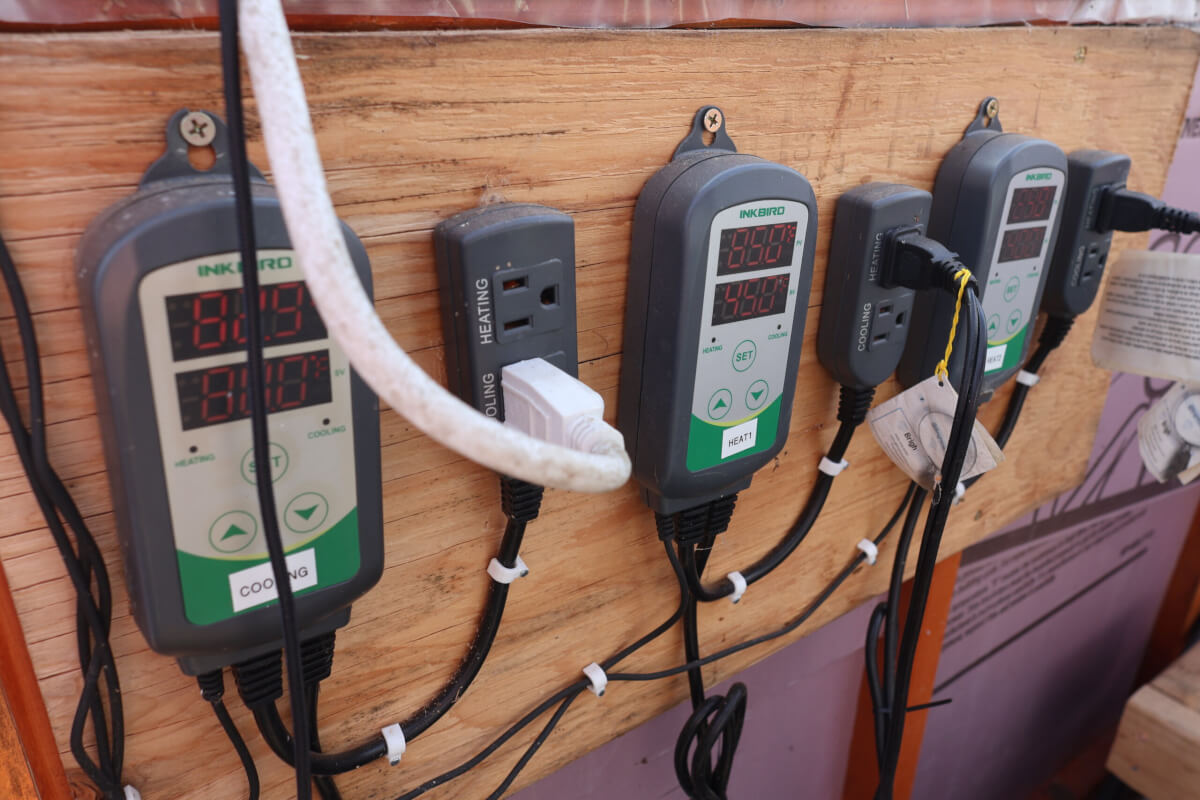
We have a nice little temperature control panel, built from commonly available temperature controllers. These control our fans and heaters to specific temperature ranges. We needed three, one for fans and two to distribute the high electrical load of space heaters.
For a well insulated and modest sized greenhouse, something like this is enough. But, it’s not a universal solution and requires some individual study. There’s many ways to heat, this is just how we did it!
