
Listen To This Article!
After gardening for a few years, one of the things you’ll need to start paying attention to is seed viability.
This concept refers to a seed’s ability to germinate and produce a viable seedling—or, more simply, how long your seeds will last.
It’s important to know that seeds have an estimated shelf life, which can vary based on several factors.

Managing your seed collection becomes an important process over time, and that’s what we’ll discuss in this article!
We also have a video on this subject. While it’s best to check out our seed viability charts here, this will give you an excellent overview of the topic!
What Factors Contribute To Seed Viability?
How long seeds will last is not an absolute. There are several factors that can influence seed viability, some of which are within the gardener’s control and others that are not.
In general, the factors affecting seed viability include:
- The type of seed (variety of plant)
- Storage conditions for seeds (temperature, humidity, light, oxygen, etc.)
- Genetics of the parent plants
- Seed maturity at harvest time
- Handling of the seed (e.g., exposure to moisture, drying method)
- Biological factors (health of the seed-bearing plant, quality of seed-bearing fruit, disease, etc.)
- Seed treatments (e.g., pelletization and other protections)
- Random chance or luck
As you can see, some of these factors are fully within your control. However, if you purchase seeds, many of these aspects are beyond your control.
We generally recommend focusing on the factors you can control. Don’t worry about the rest unless you encounter problems!
How Long Will Seeds Typically Last?
This guide provides general guidelines, but keep in mind that actual results can vary significantly based on several factors.
Even with perfect seed storage and optimal germination techniques, some seeds may still not sprout.
Conversely, even very fresh seeds might fail to germinate.
It’s also possible for old seeds, well past their prime, to germinate and produce a viable plant.
Variability is inherent in nature; biology doesn’t operate on a precise clock.

Seeds don’t simply “go bad” all at once.
Instead, think of seed viability as a gradual decline, more like a hill than a sharp cliff.
Remember that viability estimates are just that—estimates. Seeds can last for more or less time than expected.
Seed viability is about estimating a reasonable ‘shelf life’ where you’ll still achieve decent germination.
Estimated Seed Viability Timeframes
Let’s get straight to the point. Below, you will find common seeds and their estimated shelf lives.
These estimates assume that the seeds are well cared for and have been stored under proper conditions. For seed storage tips, see further down.
Vegetable Seed Viability
| Vegetable Seed: | Seed Viability: |
|---|---|
| Artichokes | 5 years |
| Arugula | 4-6 years |
| Asian Greens | 3 years |
| Asparagus | 4-6 years |
| Barley | 5 years+ |
| Beans | 3 years |
| Beets | 4 years |
| Broccoli | 4-5 years |
| Brussels Sprouts | 4-5 years |
| Buckwheat | 5 years+ |
| Cabbage | 4-5 years |
| Carrots | 3-4 years |
| Cauliflower | 4-5 years |
| Celery/Celeriac | 5-6 years |
| Chard (Swiss) | 4-5 years |
| Collards | 4-5 years |
| Corn | 1-2 years |
| Cress (Watercress) | 5 years |
| Cucumbers | 5-6 years |
| Eggplant | 4-5 years |
| Endive/Escarole | 5 years |
| Kale | 4-5 years |
| Kohlrabi | 4-5 years |
| Leeks | 1-2 years |
| Lettuce | 2-6 years |
| Melons | 4-6 years |
| Mustard | 4 years |
| Oats | 5 years+ |
| Okra | 2-3 years |
| Onions | 1-2 years |
| Parsnip | 1-2 year |
| Peas | 2-3 years |
| Peppers | 2-5 years |
| Pumpkins | 4-6 years |
| Quinoa | 5 years+ |
| Radish | 4-5 years |
| Rhubarb | 4 years |
| Rutabagas | 3-4 years |
| Rye | 5 years+ |
| Sorghum | 4 years |
| Spinach | 2-3 years |
| Squash (Summer & Winter) | 4 years |
| Strawberry | 5 years |
| Tomatillo | 3-5 years |
| Tomato | 3-5 years |
| Turnip | 5 years |
| Watermelon | 4-5 years |
| Wheat | 5 years+ |
Herb & Spice Seed Viability
| Herb: | Seed Viability: |
|---|---|
| Anise | 2 years |
| Basil | 3-5 years |
| Bee Balm | 4 years |
| Borage | 2-3 years |
| Caraway | 1-2 years |
| Catnip | 3 years |
| Chervil | 2-3 years |
| Chicory | 4-5 years |
| Chamomile | 3-4 years |
| Chives | 1-2 years |
| Cilantro/Coriander | 2-3 years |
| Cumin | 1-2 years |
| Dill | 3-4 years |
| Fennel | 3-4 years |
| Hyssop | 2-3 years |
| Lavender | 1-2 years |
| Lemon Balm | 2-3 years |
| Lovage | 1-2 years |
| Marjoram | 2-3 years |
| Mint | 2-4 years |
| Oregano | 3-4 years |
| Parsley | 1-3 years |
| Purslane | 3-4 years |
| Rosemary | 2-3 years |
| Sage | 2 years |
| Salvia | 1-3 years |
| Savory | 2-3 years |
| Stevia | 1-2 years |
| Thyme | 2-3 years |
| Valerian | 2-3 years |
Flower Seed Viability
| Flower Seed: | Seed Viability: |
|---|---|
| Ageratum | 4 years |
| Alyssum | 3-5 years |
| Amaranthus | 4-5 years |
| Angelica | 2 years |
| Anthemis | 2 years |
| Anthirrhium | 3-4 years |
| Artemisia | 2-4 years |
| Aster | 1-2 years |
| Calendula | 5-6 years |
| Carnation | 3-5 years |
| Celosia | 3-4 years |
| Cineraria | 3-4 years |
| Clarkia | 2-3 years |
| Cosmos | 3-4 years |
| Columbine | 1-2 years |
| Dahlia | 2-4 years |
| Daisy | 3 years |
| Digitalis | 1-2 years |
| Echinacea | 4 years |
| Eschscholzia | 3 years |
| Gaillardia | 2-3 years |
| Godetia | 3 years |
| Helianthus | 2-3 years |
| Heliotrope | 1-2 years |
| Hollyhock | 2-3 years |
| Impatiens | 1-2 years |
| Larkspur | 1-2 years |
| Linaria | 3 years |
| Linum | 1-2 years |
| Lisianthus | 2-3 years |
| Lobelia | 4 years |
| Lupine | 3-5 years |
| Marigold | 2-3 years |
| Milkweed | 1 year |
| Nasturtium | 5-7 years |
| Nicotiana | 4-5 years |
| Nigella | 3-4 years |
| Pansy | 1-2 years |
| Petunia | 2-3 years |
| Phlox | 2-3 years |
| Poppy | 2-4 years |
| Salvia | 1 year |
| Scabiosa | 3-5 years |
| Schizanthus | 4-5 years |
| Snapdragon | 3-5 years |
| Sunflower | 5 years |
| Statice | 1-2 years |
| Stock | 4-5 years |
| Strawflower | 1-2 years |
| Sweet Pea | 3-5 years |
| Sweet William | 2 years |
| Verbena | 3-4 years |
| Viola | 2-3 years |
| Wallflower | 4-5 years |
| Yarrow | 3-5 years |
| Zinnia | 5-6 years |
The Law & Garden Seed Viability
In the past, seed viability was a significant issue. There were no established standards to ensure that seeds would germinate adequately.
This meant that buyers could unknowingly purchase old seeds with low germination rates.
This problem is critical because seeds are a fundamental aspect of food security. The absence of standards puts our food supply at risk.
To address this, many states in the United States have implemented laws defining minimum seed viability percentages.
If seeds do not meet these standards, they must be clearly labeled as having “low germination.”

If you’ve ever received a seed packet with such a label, it’s due to these regulations.
This article does not delve deeply into the specifics of these state laws but aims to raise awareness about this practice.
Thanks to these regulations, most seeds you purchase should have at least a 75% germination rate when new, meaning three out of four seeds should grow into plants.
However, keep in mind that there are other factors, besides seed viability, that can cause germination failure.
Additionally, most retailers selling seeds have an incentive to provide high-quality seeds. They want you to be satisfied with your purchase and return as a customer.
Testing Garden Seed Viability
If you’re unsure whether your seeds are still viable, there’s an easy way to find out!
You can perform a simple test to determine both their viability and specific germination rate.
While you could simply sow your seeds, low germination rates might result in fewer plants than you need.
Here’s the easiest method to test seed viability: the paper towel method:
- Take a single paper towel and fold it in half two or three times, then moisten it with tap water.
- Sprinkle five to ten seeds between the folds of the paper towel.
- Close the paper towel flap and place it inside a Ziplock plastic bag, sealing it to retain moisture.
- Place the bag anywhere convenient; it doesn’t need direct light or artificial lighting to germinate. Aim for an area around 65 to 80 degrees Fahrenheit.
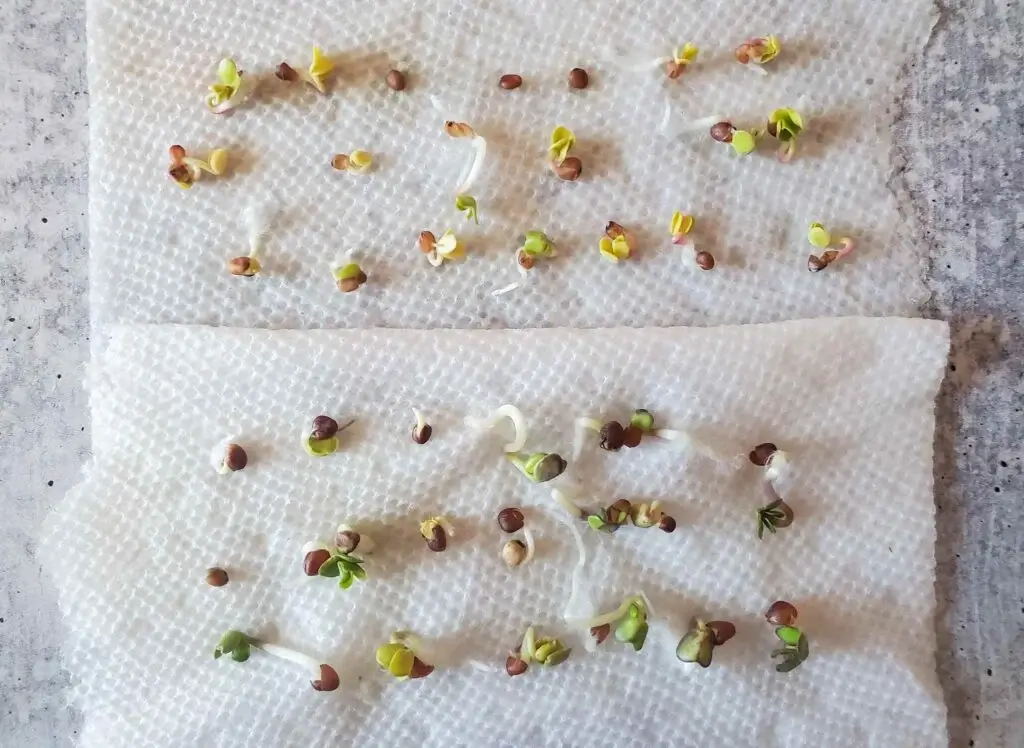
Wait for the initial germination period to pass, typically a few days to a week. Then, check the seeds for sprouts.
If you see any sprouts, your seeds are still viable!
You might need to check the seeds several times over a period of 2 to 4 weeks, checking once a week or so. This will account for any “late bloomers.”
Note that some seeds can take an exceptionally long time to germinate, sometimes as much as several weeks or more.
If you have a lot of failures, consider looking up the maximum germination time for your specific seed type.
Also, plan to do this test well ahead of your typical sowing schedule, as it can take some time for the test seeds to germinate.
Determining Your Exact Seed Viability Percentage
If you use the method described above, you can calculate your precise seed viability percentage. To determine this percentage, use the following formula:
- Number of seeds germinated / Number of seeds tested
- Multiply the result by 100 (or simply use the result if you are familiar with calculating percentages)

This will give you a fairly accurate picture of the percentage of seeds that will still germinate. This data helps gardeners estimate how many seeds they need to plant to get one plant.
For example, if your seeds have only 20% viability, you would need to sow five seeds to have a reasonable assurance that at least one of those seeds will grow into a plant.
Good Seed Packet Labeling Practices
Seed labeling techniques play a significant role in determining how easy it will be to manage your seed collection.
We recommend that when you buy seeds, you clearly write the year of purchase on the packet. This helps you keep track of their age.

Some packets are marked with a “sell by” date, which is typically the year you bought them. Others may have a “best by” date. Some packets might not have any date information at all.
Labeling your seed packets with the purchase year provides a consistent and easy way to see how old your seeds are.
How To Best Store Your Garden Seeds
There are many methods available for storing your seeds from one season to the next.
The golden rule is to keep seeds dry and cool.
Generally, you should store seeds in their original packets or, if not available, in a clean envelope. Place these packets or envelopes inside another container to keep them safe and organized.
We highly recommend using a photo organizer for storing garden seeds, as shown below. This has been one of the best investments we’ve made for seed storage; we have separate organizers for vegetables and flowers.
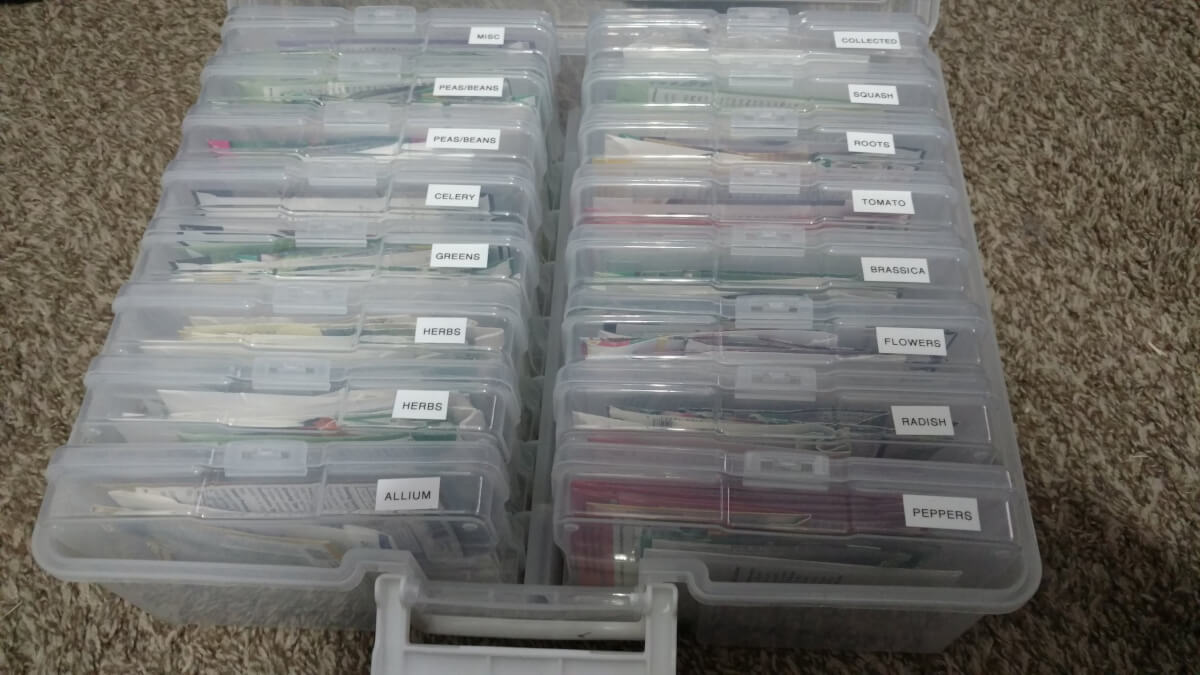
The individual containers are labeled with their contents, allowing for easy identification and organization of our entire seed collection.
Store your seeds in a consistently cool place, avoiding areas that can freeze or become too warm. Consistency in temperature is key.
We simply keep our seeds in a cool place within the house, where temperatures typically hover around 60 degrees Fahrenheit (15 degrees Celsius).
Some people store their garden seeds in a refrigerator. However, we find our fridge space too valuable for this purpose. If you choose this route, use airtight containers to prevent moisture from affecting your seeds.
Keep your seeds away from direct light or sunlight; however the envelope should provide sufficient protection from light.
If you’re collecting seeds from your own garden, ensure they are completely dry before storing them. Once dry, simply place them in an envelope and then into your storage container.
What To Do If You Have “Old” Seeds?
As mentioned earlier, seeds typically don’t suddenly stop working; their viability gradually decreases over time.
If you know the seed’s viability percentage, derived from the methods mentioned above, this information can be very accurate.
You aren’t required to test seed viability as outlined above, but there’s a risk that you may find your seeds are past their prime, which can affect your final plant counts. Worse, you can get no germination!
If your seeds have exceeded their expected viability period, you can still sow them and many times achieve good garden starts.
However, we recommend increasing the number of seeds sown in each cell or sowing more cells to compensate for lower germination rates.

Alternatively, you can take a more casual approach if you prefer. If you’re just guessing, try sowing three seeds for every plant you aim to achieve.
For seeds well past their viability timeframe, you might need to sow much higher quantities.
Sowing more seeds will help ensure that you still get plants, even if several seeds don’t germinate.
We grow too many seed types to test viability for each one, so we take the more casual approach. We also make sure to note low viability and germination issues in our garden journal for the following season.
Notes On Seeds That Only Last One Year
Some types of seeds have relatively short lifespans in terms of their viability. For instance, some can only last a year or or maybe two.
It might seem quite wasteful to replace these seeds on an annual basis. Most people would agree with this sentiment.
As mentioned earlier, seed viability tends to decline gradually, more like a hill than a cliff.
We’ve tested many of these “short life” seed types beyond their ‘best by’ dates and found that they can still have plenty of viability left after that first year or two.

However, be aware that these short-lived seeds often experience a significant drop in viability just one or two years beyond that all ready low shelf life.
To ensure you get the desired number of plants, consider increasing the total amount of seeds you sow, especially as you move further away from the recommended shelf life.
This approach also helps you use up the seed packet more fully and get the most value out of it.
Lessons In Seed Viability
We hope you’ve enjoyed our article on seed viability and found it helpful.
Understanding seed viability is crucial, especially when maintaining a seed collection over many years. The longer we’ve gardened, the more important the topic has become.
As always, if you have any comments, thoughts, or questions, please share them in the comment box below. Thank you for reading!
That’s All We Wrote!

Having a good time? Learn something? We have an ever growing list of insightful and helpful subarctic & cold climate gardening articles, just like this one!
- Cold Climate Gardening Basics 👉
- Growing Your Garden From Seed Indoors 👉
- Advanced Cold Climate Gardening Techniques 👉
- Plant Specific Cold Climate Growing Guides 👉
- Subarctic Perennial Food Forests & Foraging 👉
- Indoor Garden Lighting & Grow Rooms 👉
- Greenhouses & Temperature Control 👉
- Harvesting & Food Preservation 👉
- Solving Cold Climate Garden Problems 👉
- 700+ 1 Minute Reads 👉
- 180+ Gardening Topics! 👉
FrostyGarden.com is 100% ad-free, junk free and we do not use affiliate links or sponsorships! This resource is voluntarily supported by our readers. (Like YOU!) If we provided you value, would you consider supporting our mission?