
Listen To This Article!
One of the topics we’ve heavily explored over recent years has been to try and quantify the “actual” costs of growing our garden from seed.
Most gardeners that grow from seed have the perception that growing your own garden starts is substantially less expensive than buying plants.
But, is it really?

Our attempt to quantify costs illustrates that this savings was not as dramatic as we had initially believed. Growing from seed costs real money!
So, let’s explore the input costs and navigate the topic of what it takes financially to grow a garden from seed!
Exploring The Cost Inputs Of Growing From Seed
One of the first things we must do to quantify the cost of growing from seed is to identify the various inputs that cost real money.
As with most cost analyses, we have capital costs as well as consumable costs relating to the growing operation.

Equipment costs are usually up front costs, required to obtain the equipment necessary to perform the job. This gear can typically be re-used from season to season.
Consumable costs are the various product inputs needed that must be purchased every season to perform the task. Examples are soil, water and fertilizer.

For our analysis, we’ll use our growing operation as the source of inspiration.
Thus, this analysis likely won’t directly translate to any other growing operation. But, further on, we’ll fancy some reasonable estimates on other operations.
For a general reference, our growing from seed operation produces roughly 1,200 mature garden starts at the beginning of the season.
The Capital Costs Of Growing From Seed
Let’s start with those hard, equipment and gear related costs.
We’ve obviously purchased equipment over many years, sometimes even replacing older equipment with new stuff. For this analysis, we’ll assume we’ve only purchased it once.
It’s also probably important to note that as long term growers, we tend to buy high quality equipment that will last. That usually translates to higher costs.

These are the “real things” that we’ve spent “real money” on, as well as an approximation of what we spent on them:
- Grow Tent: $120
- LED Lighting: $1200
- Fans & Air Circulation: $250
- Tables: $250
- 1020 Trays: $300
- Humidity Domes: $100
- Seeding Trays: $75
- Inserts & Pots: $200
- System Controls (i.e. automation): $100
- Miscellaneous (i.e light hangers, labels, etc.): $100
Total: $2695
It’s very possible we’ve missed some things. If anything, I’d expect the “miscellaneous” category to be larger than estimated.
But, this gets us close enough to estimating our total capital costs. We’ll discuss how we’ll analyze this, soon.
There are obviously a number of ways to reduce related capital costs, even significantly.
The Operational Costs Of Growing From Seed
Beyond our capital costs, many inputs require continual and unending investment every season.
We have somewhat unique (and likely higher than usual) costs, given our specific location in the subarctic. But, almost any grown from seed garden will see these same input costs to some degree.

For these, we’re going to estimate the average seasonal costs that accrue over the entire “from seed” growing season. (i.e. from March to June)
- Seed purchases: $200
- Electricity (lighting, ~800 KwH): $300
- Electricity (heating, ~250 KwH): $100
- Water (~400 gallons): $40
- Fertilizer: $10
- Soil: $170
Total: $820
These are the “unavoidable” costs we have each season when growing from seed.
To obtain electricity and water prices, we’ve closely monitored usage over multiple seasons.
As you can see, these numbers are not necessarily small. But, they require a bit more massaging to fairly look at them.
A Fair Way To Look At The Capital Costs Of Growing From Seed
When it comes to those up-front equipment costs, we obviously had to lay out the cash to acquire the gear.
But, compared to consumables, capital costs are a very different kind of expense. One was an initial outlay, the other are operational costs for each season.
To fairly compare these two cost sources, we need to convert “one-time” costs into “per season” costs.

For this, we’ll borrow a very simple version of depreciation, typically used by most businesses to spread one-time cost accounting over time.
For the purposes of a simple analysis, we’ll assume the life span of our growing equipment is approximately 10 years across the board. In reality it could be more or less, but we have to pick something.
So, if we divide those up front equipment costs ($2,695) by 10 years, we get an approximate annualized cost of $270 per growing season.
The Real Costs Of Growing From Seed
So, now that we’ve performed some basic analysis of our various input costs, we now have a per-season cost we can put on growing from seed!
Our Annual Costs: $1,090
That is not a small number!

However, let’s keep in mind that this is what it takes for us to produce a reasonably large garden, capable of supplanting 15 to 20% of our annual food needs! We grow over 1,200 garden starts for that money!
This also doesn’t account for any of our actual gardening costs. This is just the costs to get from seed to garden transplant.
There are a few ways one could analyze this to ascertain some sort of “value” concept.
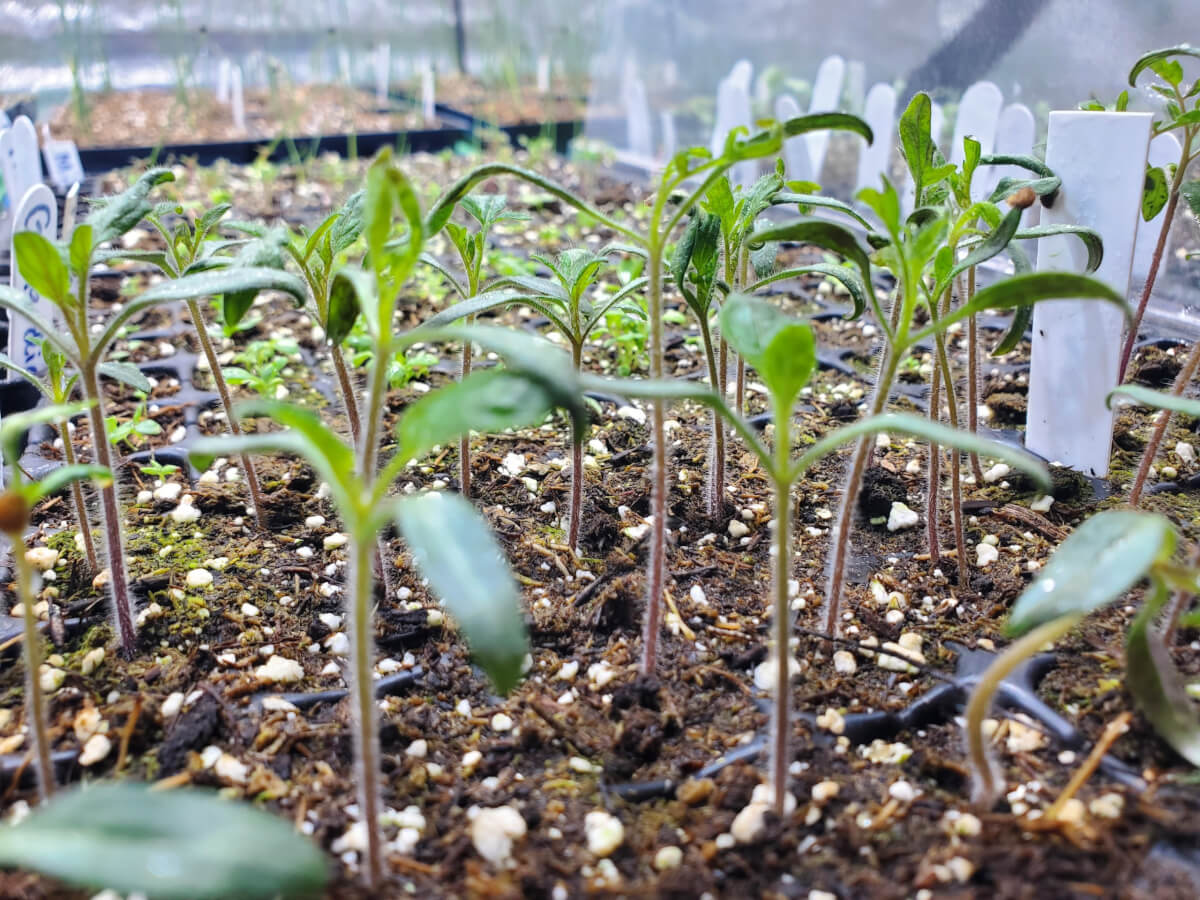
For example, the simplest calculation is that each plant costs us about 91 cents to produce.
But, some plants have more value and some have less value. If you went to a nursery, you’d find tomato plants to be much more expensive than broccoli plants.
Comparing Our Costs To Nursery Bought Plants
Now, I can tell you “off the cuff” that we know these numbers pencil out in our favor.
However, this analysis would be incomplete without some form of a comparison.
Again, we’ll use 1,200 garden starts as our reference, categorizing our plants in two ways.
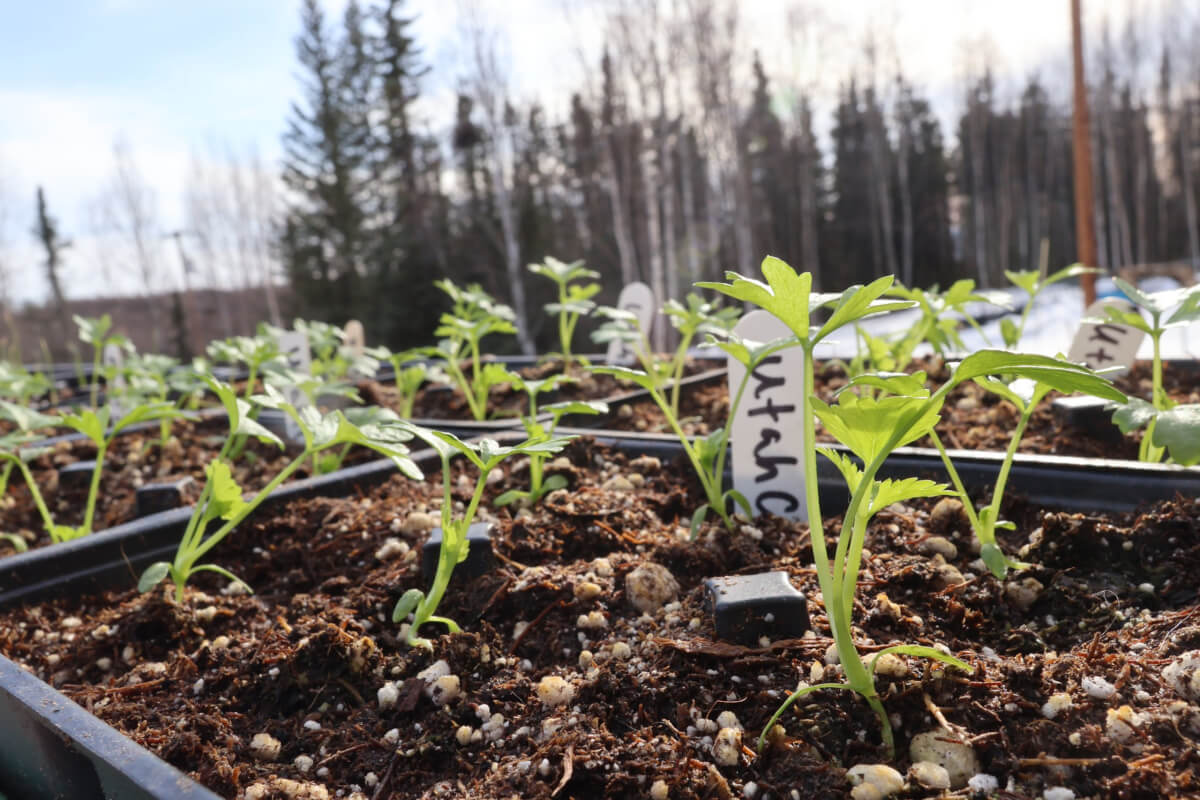
For a simple comparison, let’s say that 85% of the plants we grow could be purchased for $6 per 6-pack of plants. The remaining 15% are single plants, such as tomatoes or peppers, purchased for $6 per plant. (This is “close enough” to reality for us.)
This would translate to the following nursery based purchases:
- (170) 6-packs at $6/each, totaling $1020
- (180) Single plants at $6/each, totaling $1080
If we add that up, our rough costs for nursery bought plants would be about $2,100 per season!

Now, obviously reality is a bit more complicated. We might find cheaper plants or make different decisions.
But, what’s interesting here is that our actual costs are only about half of what the nursery would charge!
The Missing Elephant From The Room
Now, throughout this analysis, we’ve ignored something that might be considered quite important.
Labor.
Generally speaking, I’d say we easily spend 100 hours raising our garden from seed each season.

That savings means we’re only “making” about $10 per hour. That’s not a very good wage, well below the minimum wage in many states.
For fun, let’s say we “paid ourselves” a “respectable” $25 per hour? (Which, we’ll remind you, still flirts dangerously close to the poverty line!)
In that case, our home based growing from seed operation would cost $3,590 per season!
We’d be completely upside down! And hard pressed to determine whether all our harvests were worth that!
Compared to the nursery, our garden’s scale simply isn’t large enough to have labor be an accountable figure.
Comparing Garden To Garden Costs
Perhaps obviously, we are running numbers for our specific nursery and circumstances. They don’t apply to any other nursery operation.
As indicated above, some of our input costs are much higher than you might see elsewhere. Our water costs are exceptionally high, as are energy costs.
If you live in a warmer climate or have appropriate infrastructure, you might be able to leverage the free energy of the sun much more than we can.

There’s also scale issues. Obviously a grower that grows a few hundred garden starts will have less input costs than one growing two thousand.
Despite these differences, I’d expect that you could define a “reasonable range” of expected growing from seed costs.
Based on our calculations, I’d expect the average cost range is probably somewhere around 50 cents to a dollar per raised plant.
Our Final Thoughts On The Cost Of Growing From Seed
Now, obviously growing from seed is a passion project for us. But, this analysis was truly eye opening!
In many cases, growers have an instinctual feeling that growing from seed is a major source of cost savings.
While our analysis proved this is somewhat true, it also illustrates that the gap was not quite as wide as we thought it might be.

Additionally, if you add labor costs into it, the math stops mathing.
This analysis might also help you to appreciate that nursery grown plants aren’t just “all profit.” There are considerable costs that go into raising plants, especially when you consider labor!
We’ll eventually do another cost analysis for actually growing our garden in the future! That’s another area that gets really interesting!
That’s All We Wrote!

Having a good time? Learn something? We have an ever growing list of insightful and helpful subarctic & cold climate gardening articles, just like this one!
- Cold Climate Gardening Basics 👉
- Growing Your Garden From Seed Indoors 👉
- Advanced Cold Climate Gardening Techniques 👉
- Plant Specific Cold Climate Growing Guides 👉
- Subarctic Perennial Food Forests & Foraging 👉
- Indoor Garden Lighting & Grow Rooms 👉
- Greenhouses & Temperature Control 👉
- Harvesting & Food Preservation 👉
- Solving Cold Climate Garden Problems 👉
- 700+ 1 Minute Reads 👉
- 180+ Gardening Topics! 👉
FrostyGarden.com is 100% ad-free, junk free and we do not use affiliate links or sponsorships! This resource is voluntarily supported by our readers. (Like YOU!) If we provided you value, would you consider supporting our mission?